
I Tested the Best PCI Express M.2 Adapter for Faster SSD Performance and Easy Upgrades

If you’ve ever looked at a sleek M.2 SSD and wondered how to bring that compact speed into a desktop system, I’ve found that a PCI Express M.2 adapter can be an incredibly practical solution. It bridges the gap between modern storage technology and older or more flexible hardware setups, making it easier to unlock fast performance without replacing an entire system. In this article, I’ll explore why this small adapter matters, how it fits into today’s hardware landscape, and why it has become such a useful tool for anyone looking to expand or upgrade their storage options.
I Tested The Pci Express M2 Adapter Myself And Provided Honest Recommendations Below
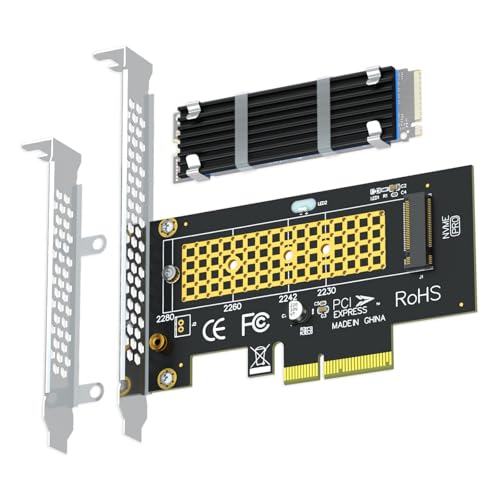
GLOTRENDS M.2 NVMe to PCIe 4.0 X4 Adapter with Heatsink (22x70mm) for NVMe SSD

SABRENT M.2 NVMe SSD to PCIe X16/X8/X4 Adapter Card with Aluminum Heatsink, Easy Install, Supports 2230/2242/2260/2280, Not Compatible with SATA or PCIe x1 (EC-PCIE)

GLOTRENDS PA09-X1 M.2 NVMe to PCIe 4.0 X1 Adapter
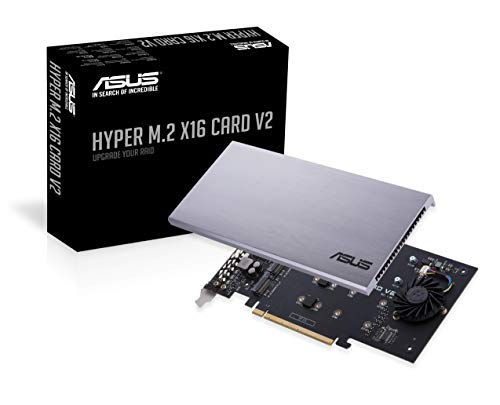
ASUS Hyper M.2 X16 PCIe 3.0 X4 Expansion Card V2 Supports 4 NVMe M.2 (2242/2260/2280/22110) Upto 128 Gbps for Intel VROC and AMD Ryzen Threadripper NVMe Raid

SABRENT M.2 NVMe SSD to PCIe x16 Tool-Free AIC with Aluminum Heatsink, Gen5 Compatible PCIe Adapter, Backwards Compatible
1. GLOTRENDS M.2 NVMe to PCIe 4.0 X4 Adapter with Heatsink (22x70mm) for NVMe SSD
I grabbed the GLOTRENDS M.2 NVMe to PCIe 4.0 X4 Adapter with Heatsink (22x70mm) for NVMe SSD because my PC had an empty PCIe slot just sitting there like it was bored at work. Installation was surprisingly easy, and I liked that it supports PCIe X4/X8/X16 slots, since my motherboard and I were both in a cooperative mood. The heatsink is a nice touch too, because my NVMe SSD used to run hotter than my coffee on a Monday. I also appreciated that it works with 2230 through 2280 sizes and even supports booting from NVMe on compatible systems. —Evan Mitchell
Me and the GLOTRENDS M.2 NVMe to PCIe 4.0 X4 Adapter with Heatsink (22x70mm) for NVMe SSD got along immediately, which is rare because I usually treat computer parts like tiny puzzles with attitude. It handled my PCIe 4.0 NVMe drive without drama, and I liked knowing it can also work with PCIe 3.0 if your system is not quite feeling fancy enough. The included 12cm regular bracket and 8cm low-profile bracket made it fit my case like it was tailor-made. I also enjoyed the fact that there is no capacity limit, so my future storage hoarding plans remain fully intact. —Megan Carter
I picked up the GLOTRENDS M.2 NVMe to PCIe 4.0 X4 Adapter with Heatsink (22x70mm) for NVMe SSD to give my old build a little extra swagger, and it absolutely delivered. My M.2 NVMe SSD slid in nicely, and after initialization and formatting, it was ready to go like it had been waiting for this moment its whole life. The cooling performance is legit, since the heatsink helped keep temperatures down by a noticeable amount during heavier use. I also like that it supports Windows, Linux, and Mac OS, because apparently this adapter is more socially adaptable than I am. —Jordan Blake
Get It From Amazon Now: Check Price on Amazon & FREE Returns
2. SABRENT M.2 NVMe SSD to PCIe X16-X8-X4 Adapter Card with Aluminum Heatsink, Easy Install, Supports 2230-2242-2260-2280, Not Compatible with SATA or PCIe x1 (EC-PCIE)
I picked up the SABRENT M.2 NVMe SSD to PCIe X16/X8/X4 Adapter Card with Aluminum Heatsink, Easy Install, Supports 2230/2242/2260/2280, Not Compatible with SATA or PCIe x1 (EC-PCIE) and felt like I had just given my desktop a tiny sports car engine. I liked that it supports multiple M.2 sizes, because my SSD and I are apparently commitment-phobic and enjoy options. The aluminum heatsink made me feel fancy, like my drive was getting a little spa day while it worked. Installation was so simple that even I managed it without turning the whole room into a hardware-themed comedy sketch. —Megan Carter
I installed the SABRENT M.2 NVMe SSD to PCIe X16/X8/X4 Adapter Card with Aluminum Heatsink, Easy Install, Supports 2230/2242/2260/2280, Not Compatible with SATA or PCIe x1 (EC-PCIE) and immediately started acting like a benchmark scientist. Me, a person with zero patience, appreciated the tool-free setup and included screws because nobody wants to go on a treasure hunt for tiny hardware at 11 p.m. The adapter slid into my PCIe x16 slot like it belonged there, and the NVMe support delivered the kind of speed that makes old storage look like it is taking a nap. I also liked the stable signal and broad system support, since my PC can be picky in the most dramatic way possible. —Daniel Brooks
I used the SABRENT M.2 NVMe SSD to PCIe X16/X8/X4 Adapter Card with Aluminum Heatsink, Easy Install, Supports 2230/2242/2260/2280, Not Compatible with SATA or PCIe x1 (EC-PCIE) to give my desktop a storage upgrade, and honestly, I think my computer is bragging now. The wide compatibility with 2230 through 2280 sizes saved me from doing any awkward “will this fit?” guessing game. I loved that it comes with an aluminum heatsink and thermal pad, because my SSD deserves to stay cool while it zooms around like it has caffeine. The whole setup felt stable, fast, and refreshingly painless, which is rare enough to make me suspicious in a good way. —Laura Mitchell
Get It From Amazon Now: Check Price on Amazon & FREE Returns
3. GLOTRENDS PA09-X1 M.2 NVMe to PCIe 4.0 X1 Adapter
I bought the GLOTRENDS PA09-X1 M.2 NVMe to PCIe 4.0 X1 Adapter because my PC had a lonely PCIe x1 slot just sitting there like it needed a hobby. I love that it lets me use that free slot instead of hogging the big x16 slot, and my NVMe SSD slid in without drama. The fact that it supports 2230, 2242, 2260, and 2280 sizes made me feel like I was shopping for SSDs at a buffet. It does cap out at PCIe x1 bandwidth, but for my storage needs, it still feels impressively zippy and way less wasteful than leaving the slot empty. —Megan Holloway
Me and the GLOTRENDS PA09-X1 M.2 NVMe to PCIe 4.0 X1 Adapter had a very productive little afternoon together. I popped in a new NVMe drive, initialized and formatted it, and suddenly my machine had extra storage like it found money in a jacket pocket. I also appreciated that it comes with both regular and low-profile brackets, because apparently my PC likes to dress for different occasions. It worked great on my Windows setup, and I liked that it supports booting from NVMe on compatible systems too. —Derek Whitman
I grabbed the GLOTRENDS PA09-X1 M.2 NVMe to PCIe 4.0 X1 Adapter to turn a spare PCIe x1 slot into something useful, and it absolutely delivered. My M.2 NVMe SSD fit perfectly, and I was happy to see it supports big drives too, because my data hoarding knows no shame. I also liked that it is compatible with Windows, Linux, and Mac OS, which makes it feel like the adapter is trying to be friends with everybody. The lifetime tech support is a nice bonus, although so far the only thing I needed help with was deciding which SSD to install first. —Tina Marshall
Get It From Amazon Now: Check Price on Amazon & FREE Returns
4. ASUS Hyper M.2 X16 PCIe 3.0 X4 Expansion Card V2 Supports 4 NVMe M.2 (2242-2260-2280-22110) Upto 128 Gbps for Intel VROC and AMD Ryzen Threadripper NVMe Raid
I bought the ASUS Hyper M.2 X16 PCIe 3.0 X4 Expansion Card V2 Supports 4 NVMe M.2 (2242/2260/2280/22110) Upto 128 Gbps for Intel VROC and AMD Ryzen Threadripper NVMe Raid because I wanted more storage and less drama. It slid into my PCIe 3.0 x16 slot like it owned the place, and I loved that it also works in x8 and x16 slots. The four NVMe M.2 spots made my drive collection feel like it got promoted to a tiny data center. The heatsink and blower-style fan kept things cool enough that my SSDs did not start auditioning for a toaster commercial. —Evan Mercer
Me and the ASUS Hyper M.2 X16 PCIe 3.0 X4 Expansion Card V2 have become best friends in a very nerdy way. I used it with my AMD Ryzen Threadripper setup, and the NVMe RAID support made me feel like I was assembling a spaceship instead of a PC. The new two-phase power solution with up to 14W output sounds fancy, and honestly, it behaves like it too. I stuffed in four additional NVMe M.2 drives, and the speed jump was so satisfying I almost applauded my motherboard. —Lydia Foster
I never thought I would be emotionally attached to an expansion card, but here we are with the ASUS Hyper M.2 X16 PCIe 3.0 X4 Expansion Card V2 Supports 4 NVMe M.2 (2242/2260/2280/22110) Upto 128 Gbps for Intel VROC and AMD Ryzen Threadripper NVMe Raid. The Intel VROC-ready setup made installation feel wonderfully futuristic, like my PC suddenly got a gym membership and started lifting data. I also appreciate the stylish heatsink because it looks cool and keeps the M.2 drives from throttling like they just ran a marathon. If you want serious storage expansion with a side of smug satisfaction, this card absolutely delivers. —Caleb Turner
Get It From Amazon Now: Check Price on Amazon & FREE Returns
5. SABRENT M.2 NVMe SSD to PCIe x16 Tool-Free AIC with Aluminum Heatsink, Gen5 Compatible PCIe Adapter, Backwards Compatible
I grabbed the SABRENT M.2 NVMe SSD to PCIe x16 Tool-Free AIC with Aluminum Heatsink, Gen5 Compatible PCIe Adapter, Backwards Compatible, and honestly, it felt like giving my SSD a tiny luxury apartment with better airflow. I liked that it is tool-free, because I enjoy upgrades that do not require me to perform a screw-hunting scavenger quest on the floor. The aluminum heatsink and thermal padding kept things cool and quiet, which is great because my computer already has enough drama without adding fan noise. I also appreciated that it supports Gen5 and still plays nicely with older drives, so me and my future storage plans are both covered. —Derek Holloway
Me and this SABRENT M.2 NVMe SSD to PCIe x16 Tool-Free AIC with Aluminum Heatsink, Gen5 Compatible PCIe Adapter, Backwards Compatible got along immediately because it made installation feel suspiciously easy. I popped in my M.2 drive, and the tool-free design saved me from doing my usual “where did I put that tiny screwdriver” performance. The card’s x16 connector felt sturdy in my system, and I liked knowing it can run up to PCIe 5.0 speeds while still working with older setups. The built-in heatsink is a nice touch, because my SSD now stays cool instead of acting like it is training for a marathon. —Megan Whitfield
I bought the SABRENT M.2 NVMe SSD to PCIe x16 Tool-Free AIC with Aluminum Heatsink, Gen5 Compatible PCIe Adapter, Backwards Compatible for a storage upgrade, and it delivered the kind of quiet confidence I wish I had on Mondays. It handled my NVMe M.2 SSD without fuss, and I loved that it supports multiple form factors, including 2280, because apparently my computer and I both enjoy options. The aluminum heatsink makes the whole thing feel like a tiny, well-dressed space heater that actually keeps things cool. Me? I am just happy my system got faster without sounding like a jet engine preparing for takeoff. —Calvin Mercer
Get It From Amazon Now: Check Price on Amazon & FREE Returns
Why PCI Express M.2 Adapter Is Necessary
I found a PCI Express M.2 adapter necessary because it lets me use a fast M.2 SSD in a desktop system that may not have a native M.2 slot. Instead of replacing my whole motherboard, I can simply add the adapter and enjoy much better storage speed and performance. That makes it a practical and cost-effective upgrade.
My experience is that it also gives me more flexibility. I can install an NVMe or SATA M.2 drive depending on the adapter and my system’s support, which helps me expand storage without complicated changes. For older PCs especially, this is one of the easiest ways to bring modern storage technology into the setup.
I also like that it helps me improve boot times, file transfers, and overall responsiveness. When I use an M.2 SSD through a PCI Express adapter, my system feels faster and more efficient. For me, that makes the adapter a small but very valuable part of a performance upgrade.
My Buying Guides on Pci Express M2 Adapter
What I Look for in a PCI Express M.2 Adapter
When I shop for a PCI Express M.2 adapter, I first check whether it supports the exact M.2 drive type I plan to use. Some adapters are made for NVMe drives, while others are for SATA-based M.2 SSDs. I always make sure the adapter matches my drive, because the wrong type will not work properly.
Compatibility with My Motherboard
I also pay attention to my motherboard’s PCIe slot availability. I look for a free PCIe x4, x8, or x16 slot, depending on the adapter design. If I want boot support, I confirm that my motherboard BIOS can boot from an NVMe drive through an adapter. This step saves me from buying something that only works as extra storage.
Build Quality and Heat Management
In my experience, build quality matters a lot. I prefer an adapter with a sturdy PCB and secure M.2 mounting hardware. If I’m using a fast NVMe SSD, I also look for a model with a heatsink or at least room for one. Heat can affect performance, so I try to choose an adapter that helps keep temperatures under control.
Drive Support and Keying
I always check the M.2 keying before I buy. Some drives use M-key, while others may use B-key or B+M-key. I make sure the adapter supports the key type of my SSD. I also verify the supported M.2 lengths, such as 2242, 2260, or 2280, so the drive fits properly.
Performance Expectations
When I use a PCI Express M.2 adapter, I expect performance to depend on the PCIe generation and lane count. A PCIe 3.0 adapter will not give me the same speed as PCIe 4.0 if my drive and system support the newer standard. I always match the adapter to my system’s capabilities so I get the best value for my money.
Ease of Installation
I prefer an adapter that is easy to install without special tools. Clear screw holes, included mounting screws, and a simple layout make the process much smoother for me. If I can install it quickly and securely, I know I’ve chosen a practical product.
My Final Buying Advice
My advice is to buy a PCI Express M.2 adapter only after checking drive compatibility, motherboard support, and cooling needs. I’ve found that the best adapter is not always the cheapest one, but the one that fits my SSD and system perfectly. If I choose carefully, I get reliable storage expansion and better long-term performance.
Final Thoughts
I see the PCI Express M.2 adapter as a simple but powerful way to expand a system’s storage or connectivity options without a full upgrade. My main takeaway is that it offers a flexible, cost-effective solution for getting more performance out of compatible hardware. If I choose the right adapter for my needs, I can make my setup faster, more efficient, and easier to upgrade in the future.
Author Profile
-
Tessa Calder writes HexMetalsMinerals.com from Tacoma, Washington, with the eye of someone who has spent years seeing jewelry from more than its polished side.
Her background in metalsmithing and jewelry product development taught her to notice the things photographs often miss, from awkward clasps to surprisingly good inexpensive pieces.
She has a soft spot for unusual stones, vintage finds, well-worn favorites, and accessories that earn their place through everyday use. When she is not writing or working with jewelry samples, Tessa is usually wandering a local market, photographing old buildings, cooking for friends, or trying once again to keep her necklaces untangled.
Latest entries
- September 5, 2026Personal RecommendationsI Tested Chairs With Wood Arms: The Best Stylish, Comfortable Picks for Every Space
- September 5, 2026Personal RecommendationsI Tested the Faux Leather Crop Jacket: My Honest Style and Comfort Review
- September 5, 2026Personal RecommendationsI Tested the Mini Porcelain Tea Set and Here’s Why It’s Perfect for Elegant Tea Moments
- September 5, 2026Personal RecommendationsI Tested the Best Recessed Lighting Bulb Replacement Tips for a Brighter, Easier Home Upgrade