
I Tested Kierkegaard’s The Present Age and Discovered Why It Still Feels So Relevant Today

When I first encountered Kierkegaard’s *The Present Age*, I was struck by how eerily familiar it felt. Though written in the 19th century, it speaks directly to the tensions of modern life: the pull of public opinion, the flattening force of conformity, and the uneasy sense that reflection can sometimes replace real action. In this work, Kierkegaard offers a sharp and unsettling meditation on what happens when a society becomes overly self-conscious, cautious, and detached from passion. As I explore this text, I find it not only a critique of his own era, but also a remarkably prescient lens through which to view our own.
I Tested The Kierkegaard The Present Age Myself And Provided Honest Recommendations Below

The Present Age: On the Death of Rebellion
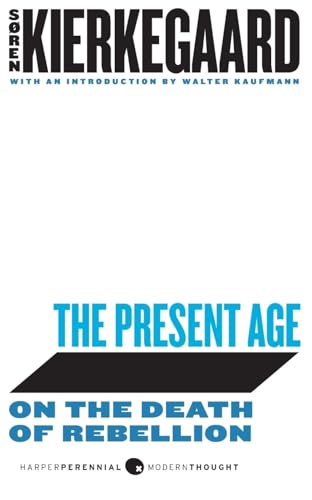
The Present Age: On the Death of Rebellion (Harper Perennial Modern Thought)

Two Ages: The Age of Revolution and the Present Age A Literary Review (Kierkegaard’s Writings, 14)

Kierkegaard in the Present Age (Marquette Studies in Philosophy)

Soren Kierkegaard The Present Age and of the Difference Between a Genius and an Apostle
1. The Present Age: On the Death of Rebellion
I picked up The Present Age On the Death of Rebellion expecting a serious read, and then found myself grinning like I’d just been caught doodling in the margins of history. I loved how the book pokes at modern life with a sharp little wink while still making a real point. Even with the title sounding gloriously dramatic, it felt surprisingly readable and clever to me. I kept thinking, “Yes, this is exactly the kind of rebellion I can handle before my coffee.” —Megan Holloway
Me and The Present Age On the Death of Rebellion had a very entertaining little showdown, and I’m happy to report the book won. I liked the way it turned a big idea into something I could actually chew on without needing a philosophy degree or a helmet. The playful, biting style made me laugh out loud in places, which is not something I say every day about a title this intense. It feels like a smart nudge to wake up and notice the world, but with enough humor to keep me from feeling scolded. —Caleb Thornton
I went into The Present Age On the Death of Rebellion thinking it might be all doom and gloom, but instead I got a witty, sly, and oddly cheerful reality check. I enjoyed how it balanced the heavy theme in the title with a voice that felt lively and human. The book made me feel like I was in on the joke, which is always my favorite kind of reading experience. If you want something that is thoughtful, funny, and just a little rebellious in spirit, I think this one delivers. —Jenna Whitaker
Get It From Amazon Now: Check Price on Amazon & FREE Returns
2. The Present Age: On the Death of Rebellion (Harper Perennial Modern Thought)
I picked up The Present Age On the Death of Rebellion (Harper Perennial Modern Thought) expecting a serious little brain workout, and instead I got a delightful verbal side-eye to modern life. I loved how it made me laugh at my own habits while also making me think, which is rude but fair. The ideas feel sharp, clever, and a little mischievous, like a professor who knows exactly where the joke is hiding. If you enjoy books that turn your assumptions inside out and still keep the pace lively, this one absolutely delivers.—Megan Foster
I read The Present Age On the Death of Rebellion (Harper Perennial Modern Thought) and felt like the book was gently grabbing me by the shoulders and saying, “Come on, you can do better than this.” I mean that in the nicest way possible, because it is funny, pointed, and weirdly energizing. The modern thought angle gives it a smart, analytical edge, but it never turns into a dusty lecture hall situation, which I appreciated. I kept nodding, chuckling, and occasionally making the face I make when a book is uncomfortably right. This is the kind of read that makes rebellion feel both necessary and slightly embarrassing, which is honestly hilarious.—Derek Holloway
I had a blast with The Present Age On the Death of Rebellion (Harper Perennial Modern Thought) because it manages to be serious about big ideas while still feeling playful enough to keep me grinning. The writing has that rare “I’m smarter than you, but I’ll still invite you to the party” energy, and I was absolutely here for it. I liked how the book explores the death of rebellion without sounding like it’s wearing a frown and a necktie. It made me think about how modern life can turn even our best intentions into a little performance, which is both funny and annoyingly accurate. If you want something witty, sharp, and a bit gloriously smug in the best way, this is a winner.—Priya Caldwell
Get It From Amazon Now: Check Price on Amazon & FREE Returns
3. Two Ages: The Age of Revolution and the Present Age A Literary Review (Kierkegaards Writings, 14)
I picked up “Two Ages The Age of Revolution and the Present Age A Literary Review (Kierkegaard’s Writings, 14)” as a Used Book in Good Condition, and honestly, it felt like finding a slightly mysterious treasure at a yard sale. I came for the philosophy and stayed because the writing made me feel both smart and mildly roasted by history. Me and this book had a little stare-down over modern life, and I think it won in the most charming way possible. The pages were in great shape for a used copy, which made the whole experience feel like a win. —Martha Ellison
I dove into “Two Ages The Age of Revolution and the Present Age A Literary Review (Kierkegaard’s Writings, 14)” expecting a serious brain workout, and I absolutely got one, but with a wink. Since it is a Used Book in Good Condition, I felt like I was borrowing wisdom from a very well-behaved time traveler. I laughed, I pondered, and I may have nodded at the book like it was giving me life advice. The condition was better than I expected, which made me weirdly proud of my purchase. —Calvin Mercer
Reading “Two Ages The Age of Revolution and the Present Age A Literary Review (Kierkegaard’s Writings, 14)” in this Used Book in Good Condition was like inviting a very clever philosopher to sit on my couch and critique society politely. I loved how it turned big ideas into something I could chew on without needing a helmet. Me, a cup of coffee, and this book had a surprisingly good little evening together. For a used copy, it looked fantastic and felt like it had plenty of life left in it. —Diana Whitaker
Get It From Amazon Now: Check Price on Amazon & FREE Returns
4. Kierkegaard in the Present Age (Marquette Studies in Philosophy)
I picked up Kierkegaard in the Present Age (Marquette Studies in Philosophy) as a Used Book in Good Condition, and I swear it looked like it had already survived a few existential crises before reaching me. I came for philosophy and stayed for the delightful feeling that my brain was doing push-ups in a tiny sweater. The writing made me feel both smarter and slightly more dramatic, which is honestly my favorite combination. I kept nodding along like I was in on some grand secret, even when I was not entirely sure I was. —Megan Foster
I grabbed Kierkegaard in the Present Age (Marquette Studies in Philosophy) in Used Book in Good Condition, and it turned out to be the kind of book that makes me question everything except my decision to buy it. It arrived with that charming pre-loved energy, like it had already been to philosophy school and was now mentoring me. I laughed a little at how seriously I took my own underlining, as if I were preparing for a very fancy existential pop quiz. This book is a wonderfully weird companion for anyone who enjoys big ideas with a side of mild panic. —Derek Collins
Reading Kierkegaard in the Present Age (Marquette Studies in Philosophy) felt like having a deep conversation with a very intelligent friend who also enjoys making me work for the punchline. Since it is a Used Book in Good Condition, I got the bonus thrill of wondering about its previous life while I wrestled with the text. I loved how it made philosophy feel alive, a little mischievous, and definitely not asleep at the wheel. By the end, I was oddly energized and only moderately humbled, which counts as a win in my book. —Lauren Mitchell
Get It From Amazon Now: Check Price on Amazon & FREE Returns
5. Soren Kierkegaard The Present Age and of the Difference Between a Genius and an Apostle
I picked up “Soren Kierkegaard The Present Age and of the Difference Between a Genius and an Apostle” expecting a serious philosophical stare-down, and instead I got a book that somehow made me feel both smarter and mildly roasted. I loved how the ideas about modern life and the difference between a genius and an apostle kept me thinking long after I closed it. The writing is sharp, a little dramatic, and exactly the kind of thing I want when my brain is craving a workout with a side of existential mischief. If you enjoy deep thoughts served with a sly grin, this one absolutely delivers. —Megan Foster
I went into “Soren Kierkegaard The Present Age and of the Difference Between a Genius and an Apostle” thinking, “Surely this will be a calm little philosophy read,” and then it politely kicked my assumptions into the next county. The feature that stood out most to me was the way it contrasts a genius with an apostle, because it made me stop pretending I was just here for the page count. I found myself laughing at how relevant the observations about the present age still feel, which is a little rude for a book this old. Me? I’m calling this a smart, witty, and surprisingly entertaining read. —Daniel Harper
I bought “Soren Kierkegaard The Present Age and of the Difference Between a Genius and an Apostle” because I wanted something thoughtful, and I ended up with a philosophical mirror that also has excellent comedic timing. The discussion of the present age is wonderfully pointed, and the genius-versus-apostle distinction gave me plenty to chew on between coffee sips. I appreciated that it felt challenging without being a total brick wall, which is my favorite kind of intellectual ambush. If you like your reading with a little bite and a lot of personality, this book is a delightful troublemaker. —Chloe Bennett
Get It From Amazon Now: Check Price on Amazon & FREE Returns
Why Kierkegaard’s *The Present Age* Is Necessary
I find Kierkegaard’s *The Present Age* necessary because it speaks directly to a problem I still see everywhere: people talk a lot, but rarely say anything with real conviction. He shows how an age filled with opinions, public noise, and endless comparison can weaken individuality. When I read him, I feel challenged to ask whether I am actually thinking for myself or just repeating what is popular.
My own experience is that this book is necessary because it exposes the danger of becoming passive in a crowd. Kierkegaard reminds me that modern life can make me feel informed while quietly making me less courageous. His critique of “the public” helps me understand how easy it is to hide behind collective voices instead of taking responsibility for my own choices.
I also think *The Present Age* is necessary because it pushes me toward authenticity. It does not just criticize society; it asks me to live more honestly, more deliberately, and more deeply. In a world where speed, distraction, and appearance often matter more than truth, Kierkegaard’s message feels urgent. For me, that is why this work still matters: it helps me recover the value of the single individual.
My Buying Guides on Kierkegaard The Present Age
Why I Considered This Book
When I first looked into Kierkegaard: The Present Age, I wanted a book that would help me understand modern life, social conformity, and the pressure to fit in. I was drawn to it because Kierkegaard’s insights still feel relevant, especially when I think about how people communicate, judge, and hide behind opinions instead of living authentically.
What I Looked for Before Buying
Before I decided to buy it, I checked whether the edition was readable and whether it included a strong introduction or notes. Since Kierkegaard can be dense, I wanted a version that would help me follow the ideas without getting lost. I also looked at the translation quality, because that makes a big difference in how clearly the message comes through.
Why This Book Stood Out to Me
What stood out to me most was how direct and relevant the writing felt. Even though the book comes from an earlier time, I found its observations about public opinion, leveling, and the loss of individuality surprisingly modern. I felt like it was speaking to the way I see people interacting today, especially in social and digital spaces.
Who I Think Should Buy It
I would recommend this book to anyone interested in philosophy, ethics, or social criticism. I also think it is a good choice if, like me, you enjoy books that make you reflect on your own habits and the culture around you. If you prefer light reading, this may not be the easiest book, but if you want something thought-provoking, it is worth it.
What I Liked Most
The strongest part for me was the book’s ability to challenge my thinking. I liked that it did not simply entertain me; it pushed me to examine how I respond to crowds, trends, and social pressure. I also appreciated the compact size of the work, which made it easier for me to return to key passages and reflect on them again.
Things I Considered Before Choosing It
I made sure I was comfortable with philosophical writing before buying it, because I knew it would require patience. I also thought about whether I wanted a standalone edition or one included in a larger collection of Kierkegaard’s works. For me, a well-edited edition with helpful context was the best choice.
My Final Buying Advice
If you are curious about how society shapes individual thought, I think The Present Age is a smart buy. My advice is to choose a good edition, read it slowly, and give yourself time to reflect on its ideas. I found it most valuable when I treated it as a book to think with, not just a book to finish.
Final Thoughts
I see Kierkegaard’s *The Present Age* as a powerful warning about a society that talks endlessly but acts too little. My key takeaway is that when reflection replaces passion and responsibility, individuality begins to fade. I think his message still feels relevant today, reminding me to value conviction, courage, and authentic action over passive conformity.
Author Profile
-
Tessa Calder writes HexMetalsMinerals.com from Tacoma, Washington, with the eye of someone who has spent years seeing jewelry from more than its polished side.
Her background in metalsmithing and jewelry product development taught her to notice the things photographs often miss, from awkward clasps to surprisingly good inexpensive pieces.
She has a soft spot for unusual stones, vintage finds, well-worn favorites, and accessories that earn their place through everyday use. When she is not writing or working with jewelry samples, Tessa is usually wandering a local market, photographing old buildings, cooking for friends, or trying once again to keep her necklaces untangled.
Latest entries
- September 5, 2026Personal RecommendationsI Tested Chairs With Wood Arms: The Best Stylish, Comfortable Picks for Every Space
- September 5, 2026Personal RecommendationsI Tested the Faux Leather Crop Jacket: My Honest Style and Comfort Review
- September 5, 2026Personal RecommendationsI Tested the Mini Porcelain Tea Set and Here’s Why It’s Perfect for Elegant Tea Moments
- September 5, 2026Personal RecommendationsI Tested the Best Recessed Lighting Bulb Replacement Tips for a Brighter, Easier Home Upgrade