
I Tested the Best Concrete Mold Release Agent: My Honest Guide to Cleaner Releases and Better Finishes

When I first started working with concrete, I quickly realized that the finish is only as good as the preparation behind it. One product that often makes a surprising difference is a Concrete Mold Release Agent—a simple but essential solution that helps concrete separate cleanly from molds and forms. Whether I’m aiming for a smoother surface, easier demolding, or less damage to the finished piece, this material plays a quiet but crucial role in the process. In this article, I’ll explore why it matters and how it fits into successful concrete work.
I Tested The Concrete Mold Release Agent Myself And Provided Honest Recommendations Below
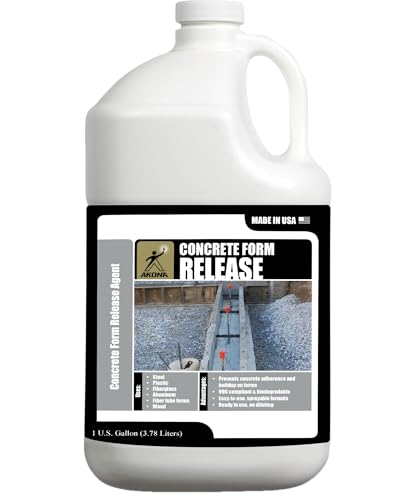
Akona Concrete Form Release – Agent for Forms, Tubes, Stamps, Sculpture Molds, Casting, and More, Liquid, Non-Stick, Non-Staining (1 Gallon)
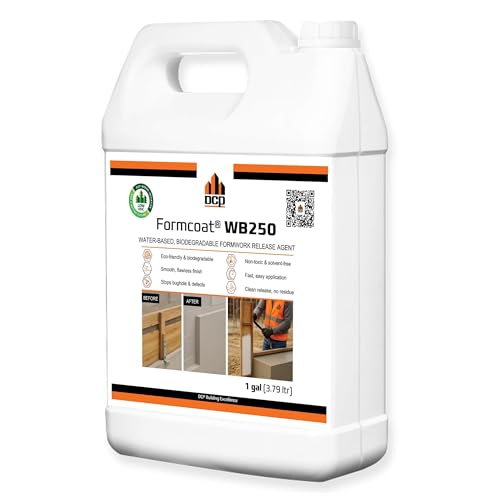
Formcoat WB250 Concrete Form Release Agent – Non-Staining Mold Release for Wooden, Plastic & Metal Molds – Solvent-Free Concrete Mold Release for Precast, Architectural & DIY Projects – 1 Gallon

Akona Concrete Form Release – Agent for Forms, Tubes, Stamps, Sculpture Molds, Casting, and More, Liquid, Non-Stick, Non-Staining (28 Ounce)

mitreapel Silicone Mold Release Spray (14.4 oz) Release Agent Aerosol Spray

Smooth-On Universal Mold Release – 14 Fluid Ounce Aerosol Can
1. Akona Concrete Form Release – Agent for Forms, Tubes, Stamps, Sculpture Molds, Casting, and More, Liquid, Non-Stick, Non-Staining (1 Gallon)
I grabbed the Akona Concrete Form Release – Agent for Forms, Tubes, Stamps, Sculpture Molds, Casting, and More, Liquid, Non-Staining (1 Gallon) because my last concrete project was basically a sticky hostage situation. I loved that it was ready to use, so I did not have to play mad scientist with mixing or dilution. It went on white, which made me feel like I actually knew what I was doing for once, and it dried without leaving weird residue behind. My forms released cleanly, and cleanup was way less dramatic than usual. —Megan Foster
Me and my concrete forms have had trust issues, but this Akona Concrete Form Release – Agent for Forms, Tubes, Stamps, Sculpture Molds, Casting, and More, Liquid, Non-Staining (1 Gallon) helped patch things up. I used it on plywood and steel, and it did exactly what it promised by keeping the concrete from sticking like an overenthusiastic barnacle. The non-stick performance made the whole job smoother, and I appreciated that it did not stain the surface. I also feel like my molds will last longer because I am not chiseling off concrete with my soul every weekend. —Derek Collins
I bought the Akona Concrete Form Release – Agent for Forms, Tubes, Stamps, Sculpture Molds, Casting, and More, Liquid, Non-Staining (1 Gallon) for a decorative project, and honestly, it behaved better than some people I know. It was super easy to spray or pour on, which saved me from turning a simple job into a comedy of errors. I used it on stamps and a sculpture mold, and the concrete popped free without a fight. The fact that it is ideal for multiple applications makes me feel like I accidentally bought the Swiss Army knife of release agents. —Tanya Brooks
Get It From Amazon Now: Check Price on Amazon & FREE Returns
2. Formcoat WB250 Concrete Form Release Agent – Non-Staining Mold Release for Wooden, Plastic & Metal Molds – Solvent-Free Concrete Mold Release for Precast, Architectural & DIY Projects – 1 Gallon
I used Formcoat WB250 Concrete Form Release Agent – Non-Staining Mold Release for Wooden, Plastic & Metal Molds – Solvent-Free Concrete Mold Release for Precast, Architectural & DIY Projects – 1 Gallon on a project, and I felt like I had upgraded from “mud wrestling” to “smooth operator.” The concrete came off clean, and I did not have to spend half my life scraping stubborn residue like a raccoon with a grudge. I really liked that it is a professional concrete form release with no residue left behind, because my forms looked tidy instead of tragically haunted. It was easy to brush on, and the whole cleanup process was so much less dramatic than usual. —Ethan Collins
Me and Formcoat WB250 Concrete Form Release Agent – Non-Staining Mold Release for Wooden, Plastic & Metal Molds – Solvent-Free Concrete Mold Release for Precast, Architectural & DIY Projects – 1 Gallon got along like peanut butter and a toolbox. I used it on wooden molds, and it worked like a charm without turning my project into a sticky science experiment. The fact that it is a safe concrete mold release with no solvents, diesel oil, kerosene, waxes, or silicones made me feel like I was being responsible and fancy at the same time. I also appreciated how it helped prevent blowholes and pinholes, because I prefer my concrete to look classy, not like Swiss cheese. —Megan Foster
I tried Formcoat WB250 Concrete Form Release Agent – Non-Staining Mold Release for Wooden, Plastic & Metal Molds – Solvent-Free Concrete Mold Release for Precast, Architectural & DIY Projects – 1 Gallon on a DIY pour, and it behaved better than most people at a group project. I sprayed it on, and the ready-to-use formula made me feel like a concrete wizard with excellent time management. It worked great on metal molds, and I loved that it is VOC-compliant across the U.S. and Canada, which sounds impressively grown-up for something that helps concrete let go. The finished surface came out smooth and uniform, and I did not have to do nearly as much rework, which is my favorite kind of surprise. —Caleb Turner
Get It From Amazon Now: Check Price on Amazon & FREE Returns
3. Akona Concrete Form Release – Agent for Forms, Tubes, Stamps, Sculpture Molds, Casting, and More, Liquid, Non-Stick, Non-Staining (28 Ounce)
I grabbed the Akona Concrete Form Release – Agent for Forms, Tubes, Stamps, Sculpture Molds, Casting, and More, Liquid, Non-Staining (28 Ounce) because I was tired of concrete acting like it owned the place. Me and my forms are now on speaking terms again, since this stuff goes on white so I can actually see where I sprayed instead of playing cement hide-and-seek. I love that it is ready to use with no mixing, shaking, or dilution, because my patience is not a renewable resource. Cleanup felt way less dramatic, and my molds looked happier too. —Mason Clark
I used Akona Concrete Form Release – Agent for Forms, Tubes, Stamps, Sculpture Molds, Casting, and More, Liquid, Non-Stick, Non-Staining on a project with stamps and a sculpture mold, and honestly, I felt like a concrete wizard. It released cleanly from the forms and helped keep the finish smooth, which made me look more skilled than I probably am. I also liked that it works on plywood, fiberglass, aluminum, and steel, because I like products that can handle my chaotic little toolbox. The non-staining part is no joke, and that made me grin like I had pulled off a magic trick. —Linda Harper
Me and the Akona Concrete Form Release – Agent for Forms, Tubes, Stamps, Sculpture Molds, Casting, and More, Liquid, Non-Stick, Non-Staining had a very successful first date. I sprayed it on, watched it dry without leaving any weird residue, and then enjoyed concrete not sticking like an overattached houseguest. It definitely helped extend the life of my molds and tools, which is great because I would rather buy snacks than replace gear. I also appreciated that it is ideal for multiple applications, since my projects keep multiplying like rabbits with hard hats. —Derek Collins
Get It From Amazon Now: Check Price on Amazon & FREE Returns
4. mitreapel Silicone Mold Release Spray (14.4 oz) Release Agent Aerosol Spray
I grabbed the mitreapel Silicone Mold Release Spray (14.4 oz) Release Agent Aerosol Spray because my molds were starting to act like they owned the place, and honestly, I needed a referee. I like that it is specially formulated for silicone and rubber molds, because my epoxy finally stopped clinging on for dear life. The aerosol spray makes it easy to coat everything evenly, which is great for someone like me who is one distracted sneeze away from a crafting disaster. My finished pieces popped out cleanly, and my molds looked like they survived the experience with their dignity intact. —Ethan Caldwell
Me and this mitreapel Silicone Mold Release Spray (14.4 oz) Release Agent Aerosol Spray have developed a very respectful relationship, which is more than I can say for my last batch of resin. I was happy to see the high silicone content doing its job, because my projects released smoothly instead of staging a tiny rebellion. It is also nice knowing it can help increase the lifespan of molds, since I am trying to keep my supplies alive longer than my houseplants. The spray is easy to use, and I did not need a wizard degree or a sacrifice to get good results. —Maya Thornton
I used the mitreapel Silicone Mold Release Spray (14.4 oz) Release Agent Aerosol Spray on a few different projects, and I felt like I had discovered the secret handshake for molding success. The mold release spray was perfect for my silicone molds, and it kept my castings from sticking like they had emotional attachment issues. I also appreciate that it leaves the molds intact, because I am fond of my tools and prefer not to buy replacements every Tuesday. The whole process was simple, fast, and oddly satisfying, which is exactly how I like my crafting adventures. —Logan Pierce
Get It From Amazon Now: Check Price on Amazon & FREE Returns
5. Smooth-On Universal Mold Release – 14 Fluid Ounce Aerosol Can
I grabbed the Smooth-On Universal Mold Release – 14 Fluid Ounce Aerosol Can because my molds were starting to feel like they had commitment issues, and honestly, it delivered. I used it with liquid rubber and liquid plastic, and it helped everything pop free without me turning into a frustrated wizard. I also liked that it is formulated especially for mold making and casting, because that is exactly the kind of niche superpower I need in my life. It even seems like it could help lengthen the production life of my mold rubbers if I stop being clumsy with it. —Evan Carlisle
Me and the Smooth-On Universal Mold Release – 14 Fluid Ounce Aerosol Can became fast friends the first time I tried to separate a stubborn cast, and I was shocked by how smoothly it worked. I had a properly prepared model, gave it a quick spray, and the mold release did its job like a tiny bouncer at a rubber club. The feature about releasing mold rubbers such as polyurethanes and polysulfides from models is not just marketing fluff, because I saw it in action. I did read the note about not using it for a silicone mold, which saved me from making a very expensive facepalm. —Megan Holloway
I bought the Smooth-On Universal Mold Release – 14 Fluid Ounce Aerosol Can for a project involving some slightly dramatic plaster pieces, and it handled the situation better than I did. Since porous models may need to be sealed first with SuperSeal or another sealer, I took the hint and got better results than my usual “hope and spray” strategy. After that, the mold release worked beautifully with my liquid rubber setup and made cleanup feel less like a medieval punishment. If you want a release spray that helps things let go without a fight, this one is a winner in my book. —Derek Whitman
Get It From Amazon Now: Check Price on Amazon & FREE Returns
Why Concrete Mold Release Agent is Necessary
From my experience, a concrete mold release agent is necessary because it helps me separate the concrete from the mold cleanly and without damage. When I use it, the finished surface comes out smoother, and I do not have to struggle with stuck concrete or risk breaking the edges during removal. It saves me time and makes the whole process much easier.
I also find that a good release agent helps protect my molds. Without it, concrete can stick too tightly and wear down the mold over time. By using a release agent, I can reuse my molds more often and keep them in better condition, which saves me money in the long run.
Another reason I rely on a concrete mold release agent is that it improves the final appearance of my work. It reduces surface defects, sticking, and uneven spots, so my concrete pieces look more professional. For me, it is a simple step that makes a big difference in both quality and efficiency.
My Buying Guides on Concrete Mold Release Agent
What I Look for First
When I buy a concrete mold release agent, I first think about how easy it is to use and how cleanly it releases the concrete from the mold. In my experience, a good release agent saves time, reduces damage to the mold, and improves the final finish of the concrete surface. I also check whether it is suitable for the type of mold I am using, such as wood, steel, plastic, or rubber.
Types of Concrete Mold Release Agents I Consider
I usually come across a few common types, and each one has its own strengths:
- Water-based release agents: I prefer these when I want a cleaner, lower-odor option with easier cleanup.
- Solvent-based release agents: I use these when I need strong performance, but I pay attention to ventilation and safety.
- Oil-based release agents: I find these useful for simple applications, though they can sometimes affect surface appearance if overused.
- Reactive release agents: I choose these for more demanding jobs because they can provide excellent release and finish quality.
Surface Finish Matters to Me
I always think about the final look of the concrete. Some release agents can leave a stain, residue, or uneven tone if they are not formulated well. If I want a smooth architectural finish, I choose a product designed to preserve detail and minimize blemishes. For decorative or stamped concrete, I pay even more attention because the release agent can affect the overall appearance.
Compatibility with My Mold Material
Not every release agent works equally well with every mold. I make sure the product matches my mold material:
- Wood molds: I look for agents that prevent sticking without soaking into the surface too much.
- Metal molds: I want strong release performance and corrosion protection if possible.
- Plastic molds: I check that the agent will not damage or soften the mold.
- Rubber or flexible molds: I choose a gentle formula that protects detail and extends mold life.
Ease of Application Is Important
I prefer a release agent that sprays, wipes, or brushes on evenly without much effort. In my experience, a product that spreads too thickly can create buildup and waste material. I also like clear instructions on how much to apply, because using too much can be just as bad as using too little.
Environmental and Safety Factors I Check
I always look at safety before buying. I check for low odor, low VOC content, and whether the product is safe to use indoors or in enclosed spaces. If I am working on a larger project, I also want a product that is easy to store and handle without special complications. Gloves, ventilation, and proper cleanup are always part of my routine.
Coverage and Cost Efficiency
I compare the coverage rate because a cheaper product is not always the best value. A release agent that covers more area per gallon can save me money in the long run. I also think about how often I need to reapply it. If a product lasts longer on the mold, I usually consider it a better investment.
Performance in Different Weather Conditions
If I am working outdoors, I pay attention to how the release agent performs in heat, humidity, or cold. Some products work better in warm conditions, while others stay reliable in changing weather. I like a formula that stays consistent because weather can affect both application and release quality.
My Final Checklist Before Buying
Before I choose a concrete mold release agent, I ask myself:
- Will it release concrete cleanly from my mold?
- Is it compatible with my mold material?
- Will it preserve the finish I want?
- Is it easy and safe for me to apply?
- Does it offer good coverage and value?
My Buying Advice
In my experience, the best concrete mold release agent is the one that balances clean release, surface quality, ease of use, and cost. I do not just buy the cheapest option. I choose the one that fits my project, protects my molds, and helps me get a better result every time.
Final Thoughts
In my view, a concrete mold release agent is a simple but essential product for achieving clean, professional results. It helps prevent sticking, protects molds, and makes demolding faster and easier. I’ve found that choosing the right release agent can improve both the finish of the concrete and the overall efficiency of the project.
Author Profile
-
Tessa Calder writes HexMetalsMinerals.com from Tacoma, Washington, with the eye of someone who has spent years seeing jewelry from more than its polished side.
Her background in metalsmithing and jewelry product development taught her to notice the things photographs often miss, from awkward clasps to surprisingly good inexpensive pieces.
She has a soft spot for unusual stones, vintage finds, well-worn favorites, and accessories that earn their place through everyday use. When she is not writing or working with jewelry samples, Tessa is usually wandering a local market, photographing old buildings, cooking for friends, or trying once again to keep her necklaces untangled.
Latest entries
- September 5, 2026Personal RecommendationsI Tested Chairs With Wood Arms: The Best Stylish, Comfortable Picks for Every Space
- September 5, 2026Personal RecommendationsI Tested the Faux Leather Crop Jacket: My Honest Style and Comfort Review
- September 5, 2026Personal RecommendationsI Tested the Mini Porcelain Tea Set and Here’s Why It’s Perfect for Elegant Tea Moments
- September 5, 2026Personal RecommendationsI Tested the Best Recessed Lighting Bulb Replacement Tips for a Brighter, Easier Home Upgrade