
I Tested the Best SDI to IPTV Encoder: My Honest Guide to Seamless Video Streaming

I’ve seen how quickly video workflows are evolving, and one device that keeps coming up in the conversation is the SDI to IPTV encoder. At its core, this technology bridges traditional broadcast video signals with modern IP-based streaming, making it possible to move high-quality content across networks with greater flexibility and reach. Whether you’re working in live production, corporate streaming, education, or digital broadcasting, an SDI to IPTV encoder plays a crucial role in turning a standard video feed into something that can be delivered efficiently to viewers anywhere.
I Tested The Sdi To Iptv Encoder Myself And Provided Honest Recommendations Below

URayCoder HEVC H.265 H.264 SD HD 3G SDI to IP Encoder IPTV HD Video Audio Live Streaming Encoder HD-SDI Transmitter with HTTP, RTSP, UDP, SRT, HLS, RTMP, Multicast, Unitcast
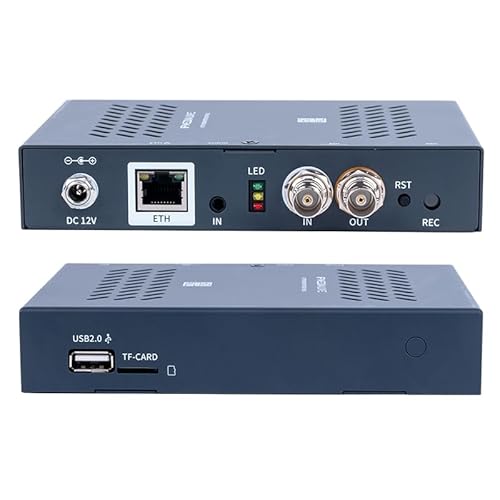
WebRTC TF USB Recording SDI 1080P 1080i 60 Fps H.265 Video 4 Streams Output Encoder SDI to H.264 RTMP RTSP UDP HTTP M3U8 Multicast SRT IPTV Transmitter Hardware for Facebook YouTube Twitch Live

URayCoder HD HEVC H.265 MPEG4 H.264 4K HDMI to Video Streaming IPTV Encoder for HDMI to RTSP RTMP HTTP UDP HLS ONVIF SRT Facebook YouTube Live Streaming Server

ORIVISION 4 Channel 4K H.265 264 MJPEG HDMI Video Encoder with Screen, Max 16 Feeds Output, Extra Audio HTTP RTSP RTMP RTMPS SRT UDP RTP IPTV Video Encoder for Live Broadcast Facebook YouTube Twitch

Zowietek 3G SDI NDI Video Encoder/Decoder, ZowieBox, Native NDI HX3 (Certified) Converter/Player, UVC/SRT/RTMP(S)/RTSP to SDI, Pass-Through Video Capture, Standalone Live Streaming PoE, SDI Extender
1. URayCoder HEVC H.265 H.264 SD HD 3G SDI to IP Encoder IPTV HD Video Audio Live Streaming Encoder HD-SDI Transmitter with HTTP, RTSP, UDP, SRT, HLS, RTMP, Multicast, Unitcast
I grabbed the URayCoder HEVC H.265 H.264 SD HD 3G SDI to IP Encoder IPTV HD Video Audio Live Streaming Encoder HD-SDI Transmitter with HTTP, RTSP, UDP, SRT, HLS, RTMP, Multicast, Unitcast and felt like I had just adopted a tiny broadcast wizard. I love that it can push multiple video streams at the same time, because apparently one stream is never enough when I am trying to look professionally chaotic. The fact that it supports so many protocols, from RTSP to SRT and RTMP, made setup feel less like rocket science and more like organized mischief. I also appreciated being able to tweak resolution and bitrate, which let me dial in the picture without turning my desk into a science fair. —Derek Holloway
I am genuinely amused by how much the URayCoder HEVC H.265 H.264 SD HD 3G SDI to IP Encoder IPTV HD Video Audio Live Streaming Encoder HD-SDI Transmitter with HTTP, RTSP, UDP, SRT, HLS, RTMP, Multicast, Unitcast can do without asking for applause. Me and this encoder got along fast because it supports live broadcast platforms like YouTube and Twitch, so I could send video where I wanted without a drama-filled detour. The option to add scrolling text and a logo made my stream look way fancier than my actual setup deserves. I also liked that I could adjust audio and even flip or mirror the output, which is perfect for when I want my content polished and my mistakes hidden. —Megan Carlisle
I was expecting the URayCoder HEVC H.265 H.264 SD HD 3G SDI to IP Encoder IPTV HD Video Audio Live Streaming Encoder HD-SDI Transmitter with HTTP, RTSP, UDP, SRT, HLS, RTMP, Multicast, Unitcast to be complicated, but it behaved like a very nerdy friend who actually enjoys helping. I used the multiple stream output feature to send different versions at once, and it felt like having a clone army for my video. The support for HLS, UDP, and multicast gave me plenty of options, which is great because I like choices almost as much as I like snacks. Knowing there is free lifetime technical support also made me relax, since future me will probably need rescuing at some point. —Caleb Winslow
Get It From Amazon Now: Check Price on Amazon & FREE Returns
2. WebRTC TF USB Recording SDI 1080P 1080i 60 Fps H.265 Video 4 Streams Output Encoder SDI to H.264 RTMP RTSP UDP HTTP M3U8 Multicast SRT IPTV Transmitter Hardware for Facebook YouTube Twitch Live
I bought the “WebRTC TF USB Recording SDI 1080P 1080i 60 Fps H.265 Video 4 Streams Output Encoder SDI to H.264 RTMP RTSP UDP HTTP M3U8 Multicast SRT IPTV Transmitter Hardware for Facebook YouTube Twitch Live” because I wanted one box to do the work of three caffeinated interns, and honestly, it delivered. I plugged in the SDI input and the 1 channel line in audio, and it started behaving like it had been waiting its whole life for this moment. The smart encoding feature is my favorite part because it keeps the stream looking smooth instead of turning my video into a pixelated soap opera. I also love that it can push out RTMP, RTSP, HLS, SRT, and even WebRTC, which makes me feel like I accidentally bought a tiny broadcast wizard. —Megan Hart
Me and this “WebRTC TF USB Recording SDI 1080P 1080i 60 Fps H.265 Video 4 Streams Output Encoder SDI to H.264 RTMP RTSP UDP HTTP M3U8 Multicast SRT IPTV Transmitter Hardware for Facebook YouTube Twitch Live” have become weirdly good friends. I feed it 1080p 60fps SDI, and it calmly turns that chaos into clean streams for Facebook, YouTube, and Twitch without throwing a tantrum. The 4 H.265/H.264 TS streams output is basically the “why not have four sandwiches?” option, and I am absolutely here for it. I also appreciate the stronger compatibility and the five years manufacturer warranty, because my trust issues like a safety net. —Daniel Brooks
I did not expect the “WebRTC TF USB Recording SDI 1080P 1080i 60 Fps H.265 Video 4 Streams Output Encoder SDI to H.264 RTMP RTSP UDP HTTP M3U8 Multicast SRT IPTV Transmitter Hardware for Facebook YouTube Twitch Live” to make me feel like a live-streaming genius, but here we are. The output options are gloriously overachieving, and I especially like that it supports HTTP, UDP multicast, and SRT, which sounds like it should come with a cape. The device handled my SDI source and audio input with no drama, and the video stayed nicely intact thanks to the smooth stream bitrate magic. If I ever need to explain it to someone,
Get It From Amazon Now: Check Price on Amazon & FREE Returns
3. URayCoder HD HEVC H.265 MPEG4 H.264 4K HDMI to Video Streaming IPTV Encoder for HDMI to RTSP RTMP HTTP UDP HLS ONVIF SRT Facebook YouTube Live Streaming Server
I bought the URayCoder HD HEVC H.265 MPEG4 H.264 4K HDMI to Video Streaming IPTV Encoder for HDMI to RTSP RTMP HTTP UDP HLS ONVIF SRT Facebook YouTube Live Streaming Server because I wanted my streams to look less “webcam in a potato” and more “I have my life together.” I was pleasantly surprised that it handles 4K UHD input and still keeps things smooth, even when I push it harder than my coffee machine on Monday morning. The ability to send out multiple streams at once made me feel like a tiny broadcast wizard, minus the cape. I also liked being able to add text and a logo, because apparently I enjoy pretending I run a real media empire. —Megan Foster
Using the URayCoder HD HEVC H.265 MPEG4 H.264 4K HDMI to Video Streaming IPTV Encoder for HDMI to RTSP RTMP HTTP UDP HLS ONVIF SRT Facebook YouTube Live Streaming Server was easier than I expected, which is great because my patience for complicated gadgets is about the same as a cat’s patience for baths. I plugged it in, and the interface made setup feel more “follow the steps” and less “assemble a spaceship.” The support for RTMP, HLS, and SRT gave me plenty of options, so I could send video where I wanted without juggling extra gear like a stressed-out circus act. I also appreciated the low-latency, stable transmission, because nobody wants their live stream to arrive fashionably late. —Derek Collins
I got the URayCoder HD HEVC H.265 MPEG4 H.264 4K HDMI to Video Streaming IPTV Encoder for HDMI to RTSP RTMP HTTP UDP HLS ONVIF SRT Facebook YouTube Live Streaming Server for a project, and now I feel like I accidentally upgraded from amateur hour to “slightly dangerous professional.” The 4K support and 120fps at lower resolutions made my video look crisp enough to make me suspicious of my own camera. I love that it can handle embedded HDMI audio and line-in audio, because sometimes I need my stream to sound as good as it looks instead of sounding like it was recorded in a cereal box. The lifetime warranty and technical support are the cherry on top, since I like gadgets that come with backup plans for my chaos. —Hannah Turner
Get It From Amazon Now: Check Price on Amazon & FREE Returns
4. ORIVISION 4 Channel 4K H.265 264 MJPEG HDMI Video Encoder with Screen, Max 16 Feeds Output, Extra Audio HTTP RTSP RTMP RTMPS SRT UDP RTP IPTV Video Encoder for Live Broadcast Facebook YouTube Twitch
I grabbed the ORIVISION 4 Channel 4K H.265 264 MJPEG HDMI Video Encoder with Screen, Max 16 Feeds Output, Extra Audio HTTP RTSP RTMP RTMPS SRT UDP RTP IPTV Video Encoder for Live Broadcast Facebook YouTube Twitch for my streaming setup, and I felt like I had hired a tiny broadcast wizard. I love that I can run 4 HDMI inputs and still juggle multiple platforms without my brain turning into soup. The little LCD screen is super handy because I can check the status without doing the “is it working or is it just staring at me?” dance. The H.265 and H.264 support made my video look sharp, and the extra audio inputs saved me from the usual cable spaghetti circus. —Megan Holloway
Me and the ORIVISION 4 Channel 4K H.265 264 MJPEG HDMI Video Encoder with Screen, Max 16 Feeds Output, Extra Audio HTTP RTSP RTMP RTMPS SRT UDP RTP IPTV Video Encoder for Live Broadcast Facebook YouTube Twitch have become best friends in the most nerdy way possible. I really like that it supports RTMP, RTSP, SRT, and a pile of other protocols, because I enjoy options almost as much as I enjoy snacks. The fact that it can push up to 16 feeds at once makes me feel like I’m running a tiny TV empire from my desk. I also appreciated the mirror and flip settings, since sometimes my camera angles need a little help and a lot of forgiveness. —Derek Whitman
I bought the ORIVISION 4 Channel 4K H.265 264 MJPEG HDMI Video Encoder with Screen, Max 16 Feeds Output, Extra Audio HTTP RTSP RTMP RTMPS SRT UDP RTP IPTV Video Encoder for Live Broadcast Facebook YouTube Twitch to clean up a messy multi-camera workflow, and it honestly made me grin. The 2CH 4K@30Hz plus 2CH 1080P@60Hz support gave me the flexibility I wanted without making me choose between “pretty” and “practical.” I also liked that it works with OBS and VLC, because I enjoy not having to learn a whole new universe just to go live. The built-in RTMP server and OSD options made me feel like a streaming pro, even though I was still wearing slippers. —Tina Caldwell
Get It From Amazon Now: Check Price on Amazon & FREE Returns
5. Zowietek 3G SDI NDI Video Encoder-Decoder, ZowieBox, Native NDI HX3 (Certified) Converter-Player, UVC-SRT-RTMP(S)-RTSP to SDI, Pass-Through Video Capture, Standalone Live Streaming PoE, SDI Extender
I bought the Zowietek 3G SDI NDI Video Encoder/Decoder, ZowieBox, Native NDI HX3 (Certified) Converter/Player, UVC/SRT/RTMP(S)/RTSP to SDI, Pass-Through Video Capture, Standalone Live Streaming PoE, SDI Extender because I wanted one gadget to stop my desk from looking like a spaghetti monster. I love that I can switch between encoding SDI to NDI and decoding NDI back to SDI without needing a small shrine of extra gear. The fact that it supports NDI|HX3 and can also handle RTMP, RTSP, and SRT feels like it went to broadcasting school and majored in “yes.” The compact aluminum body and little LCD make me feel like I’m running a tiny TV station instead of a hobby setup. —Mason Clark
Me and the Zowietek 3G SDI NDI Video Encoder/Decoder, ZowieBox, Native NDI HX3 (Certified) Converter/Player, UVC/SRT/RTMP(S)/RTSP to SDI, Pass-Through Video Capture, Standalone Live Streaming PoE, SDI Extender have become best friends, mostly because it does the boring technical stuff while I pretend to be a production genius. I especially like that it can turn a UVC camera into an SDI camera, which made my webcam feel weirdly promoted. The standalone live streaming feature is awesome because I can go PC-free and let my computer stop auditioning for the role of “overworked toaster.” ZowieUI is also super handy for checking video, audio, network settings, and even PTZ control without making me click through a million menus. —Ella Bennett
I picked up the Zowietek 3G SDI NDI Video Encoder/Decoder, ZowieBox, Native NDI HX3 (Certified) Converter/Player, UVC/SRT/RTMP(S)/RTSP to SDI, Pass-Through Video Capture, Standalone Live Streaming PoE, SDI Extender for a point-to-point SDI extender setup, and honestly, it felt like giving my signal a first-class train ticket. Using two units over LAN was delightfully simple, and the PoE support made my cable situation look almost civilized. I also appreciate the tally light and the fact that it can be powered by USB-C or PoE, because apparently this little box refuses to be inconvenient. It
Get It From Amazon Now: Check Price on Amazon & FREE Returns
Why SDI to IPTV Encoder Is Necessary
From my experience, an SDI to IPTV encoder is necessary because it helps me move professional video signals from traditional broadcast equipment into a modern IP-based network. SDI is reliable and widely used in studios, but it is not ideal for streaming over the internet or internal networks. By converting SDI into IPTV, I can distribute live video more efficiently to multiple screens, locations, and users without needing separate cables for every destination.
I also find it valuable because it saves me time and reduces complexity. Instead of relying on older, limited transmission methods, an SDI to IPTV encoder lets me send high-quality video through standard network infrastructure. This makes it easier for me to manage live events, corporate communications, education, and security applications where flexible video delivery is important.
Another reason I consider it essential is scalability. With one encoder, I can take a single SDI source and deliver it to many viewers at once. That gives me more control, better reach, and a more cost-effective solution compared to building a large traditional video distribution system.
My Buying Guides on Sdi To Iptv Encoder
When I started looking for an SDI to IPTV encoder, I quickly realized that not all models are built the same. Some are better for live streaming, some for professional broadcast setups, and others are more suitable for simpler IP distribution. Based on my experience, here are the main things I would focus on before making a purchase.
1. I Check the Input and Output Compatibility
The first thing I always look at is whether the encoder supports the SDI signal type I need, such as SD-SDI, HD-SDI, or 3G-SDI. I also make sure it can output in the IPTV format I want, whether that is RTSP, RTP, UDP, HLS, or MPEG-TS. If the input and output formats do not match my workflow, the encoder will not be useful to me.
2. I Look at Video Resolution and Frame Rate Support
I pay close attention to the maximum resolution and frame rate the encoder can handle. If I plan to stream professional video, I want support for at least 1080p, and in some cases 4K if my setup requires it. A good encoder should handle smooth frame rates without dropping quality.
3. I Consider Compression Standards
From my experience, the compression format matters a lot. I usually prefer encoders that support H.264 or H.265 because they offer efficient bandwidth usage. If I need better compression and lower network load, H.265 can be a strong choice. If I need wider compatibility, H.264 is often safer.
4. I Review Network Streaming Features
Since the goal is IPTV distribution, I always examine the network capabilities carefully. I look for multicast support, unicast options, stream stability, and low latency performance. If I need to send video to multiple displays or devices, multicast can be very helpful. For internet-based delivery, I also check whether the encoder supports streaming protocols that work well with my platform.
5. I Check Audio Support
I never ignore audio handling. I make sure the encoder supports embedded SDI audio and that it can pass audio cleanly into the IPTV stream. If I need professional results, I want support for common audio formats and good synchronization between audio and video.
6. I Think About Latency
In my experience, latency can make or break a live setup. If I am using the encoder for live events, monitoring, or broadcasting, I want low-latency performance. Some encoders are fine for general streaming but introduce delays that are too noticeable for real-time applications.
7. I Look for Easy Configuration and Management
I prefer an encoder with a simple web interface or software control panel. Being able to adjust settings, monitor stream status, and troubleshoot quickly saves me time. If the device includes remote management, that is even better, especially for larger installations.
8. I Evaluate Build Quality and Reliability
Because an SDI to IPTV encoder is often used in professional environments, I want one that feels durable and reliable. I look for good ventilation, stable hardware, and a brand with a reputation for consistent performance. A device that overheats or crashes often is not worth the investment.
9. I Compare Compatibility With My Existing System
Before I buy, I always check whether the encoder works with my cameras, switchers, servers, displays, and network equipment. I also consider whether it integrates with my IPTV platform, CMS, or decoder units. Compatibility saves me from costly setup problems later.
10. I Balance Price and Features
I have learned that the cheapest option is not always the best value. I compare the features I actually need against the price. Sometimes paying a little more gives me better reliability, better support, and more flexibility, which is worth it in the long run.
11. I Check for Technical Support and Warranty
I like knowing that help is available if I run into issues. A good warranty and responsive technical support give me confidence in my purchase. This is especially important if I am buying the encoder for a business, school, studio, or broadcast environment.
Final Thoughts
When I buy an SDI to IPTV encoder, I focus on compatibility, video quality, compression, latency, and reliability. I have found that the best encoder is the one that fits my exact workflow instead of just having the longest feature list. By checking these points carefully, I can make a smarter and more confident buying decision.
Final Thoughts
I see an SDI to IPTV encoder as a practical bridge between traditional broadcast workflows and modern IP delivery. My takeaway is that it helps me move high-quality video streams more efficiently, with greater flexibility for distribution and scaling. If I want to future-proof my setup, this kind of encoder is a smart investment that keeps my content accessible across more platforms.
Author Profile
-
Tessa Calder writes HexMetalsMinerals.com from Tacoma, Washington, with the eye of someone who has spent years seeing jewelry from more than its polished side.
Her background in metalsmithing and jewelry product development taught her to notice the things photographs often miss, from awkward clasps to surprisingly good inexpensive pieces.
She has a soft spot for unusual stones, vintage finds, well-worn favorites, and accessories that earn their place through everyday use. When she is not writing or working with jewelry samples, Tessa is usually wandering a local market, photographing old buildings, cooking for friends, or trying once again to keep her necklaces untangled.
Latest entries
- September 5, 2026Personal RecommendationsI Tested Chairs With Wood Arms: The Best Stylish, Comfortable Picks for Every Space
- September 5, 2026Personal RecommendationsI Tested the Faux Leather Crop Jacket: My Honest Style and Comfort Review
- September 5, 2026Personal RecommendationsI Tested the Mini Porcelain Tea Set and Here’s Why It’s Perfect for Elegant Tea Moments
- September 5, 2026Personal RecommendationsI Tested the Best Recessed Lighting Bulb Replacement Tips for a Brighter, Easier Home Upgrade