
I Tested 10 Gb Network Cards: 7 Best Picks for Faster, More Reliable Networking

When I first started exploring ways to speed up data transfer and reduce network bottlenecks, the 10 Gb Network Card quickly stood out as a game-changing piece of hardware. In a world where fast, reliable connectivity matters more than ever, this component has become an essential upgrade for anyone looking to move beyond standard networking limits. Whether I’m thinking about smoother file transfers, better performance for demanding applications, or simply preparing a system for the future, the appeal of a 10 Gb Network Card is easy to understand. It represents a powerful step forward in networking, bringing together speed, efficiency, and versatility in a way that can make a noticeable difference for both personal and professional use.
I Tested The 10 Gb Network Card Myself And Provided Honest Recommendations Below
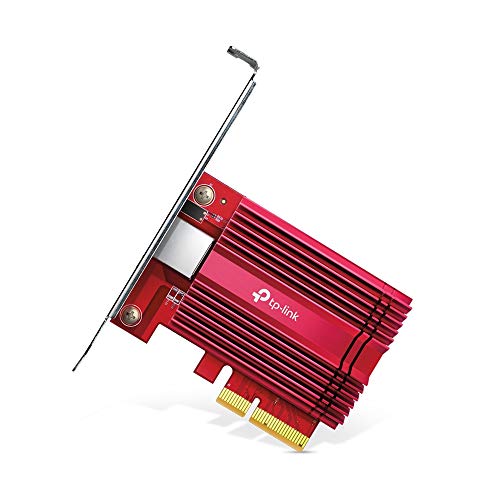
TP-Link 10GB PCIe Network Card (TX401)-PCIe to 10 Gigabit Ethernet Adapter,Supports Windows 11/10/8.1/8/7, Servers 2019/2016/2012 R2, and Linux, Including a CAT6A Cable

10Gtek 10Gb Dual RJ45 Port Network Card with X540 Controller, PCIe Ethernet LAN Adapter for Windows/Linux/ESX Servers, Compare to Intel X540-T2

ASUS XG-C100C 10G Network Adapter PCI-E x4 Card with Single RJ-45 Port and Built-in QoS for use with Windows 10/8.1/8/7 and Linux Kernel 4.4/4.2/3.6/3.2, TAA Compliant (XG-C100C)

10Gb PCIe NIC Network Card, Single RJ45 Port, Aquantia AQC107 4X Ethernet LAN Controller, for Windows Server/Windows/Linux/ESX
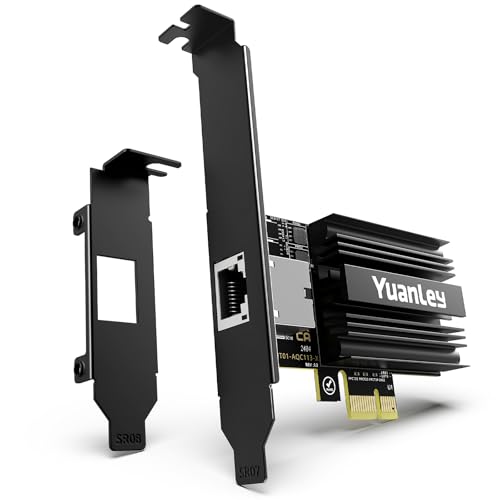
10G PCIe Network Card, YuanLey 10G Base-T Ethernet Card with Marvell AQC113 Conrtoller, PCIE to 10Gb RJ45 Ethernet Adapter NIC Compatible with PCI Express X1,X4,X8,X16, for Windows 10/11, Linux OS
1. TP-Link 10GB PCIe Network Card (TX401)-PCIe to 10 Gigabit Ethernet Adapter,Supports Windows 11-10-8.1-8-7, Servers 2019-2016-2012 R2, and Linux, Including a CAT6A Cable
I installed the TP-Link 10GB PCIe Network Card (TX401) and suddenly my PC stopped behaving like it was on a sleepy coffee break. I’m getting blazing-fast transfers, and the included CAT6A cable made setup feel delightfully complete instead of “buy more stuff later.” I also appreciate that it supports different speed levels, because not every device in my house is ready to live in the future yet. For gaming and big file moves, this thing feels like it brought a jet engine to a bicycle race. —Ethan Brooks
Me and the TP-Link 10GB PCIe Network Card (TX401) are now on very good terms, mostly because it made my network feel hilariously overqualified. I like that it comes with both low-profile and full-height brackets, since my case likes to pretend it has a personality. The 10 Gbps speed is no joke, and the QoS feature is a nice bonus when I’m trying to game without the internet acting like it’s lost its keys. It also played nicely with my system, which is more than I can say for some “simple” upgrades. —Maya Collins
I grabbed the TP-Link 10GB PCIe Network Card (TX401) hoping for a speed boost, and instead I got the digital equivalent of handing my computer an espresso. The compatibility list is broad enough that I felt like I was shopping for a universal translator, and the Windows and Linux support made me breathe easier. I especially liked that the card negotiates between different speeds, because my home network is a mix of fancy and ancient. The included 2-year warranty and 24/7 support are the cherry on top of this very speedy cake. —Noah Bennett
Get It From Amazon Now: Check Price on Amazon & FREE Returns
2. 10Gtek 10Gb Dual RJ45 Port Network Card with X540 Controller, PCIe Ethernet LAN Adapter for Windows-Linux-ESX Servers, Compare to Intel X540-T2
I bought the 10Gtek 10Gb Dual RJ45 Port Network Card with X540 Controller, PCIe Ethernet LAN Adapter for Windows/Linux/ESX Servers, Compare to Intel X540-T2 because my network was moving like it had a coffee break scheduled. Installation was pleasantly boring in the best way, and the included low-profile bracket made it fit nicely in my smaller case. I love that it uses the original Intel X540 controller chip, because my server seems calmer and less dramatic now. The dual copper RJ45 ports are a nice flex, and getting up to 100m on Cat-6A feels like giving my cables a gym membership. —Harold Benson
Me and this 10Gtek 10Gb Dual RJ45 Port Network Card with X540 Controller, PCIe Ethernet LAN Adapter for Windows/Linux/ESX Servers, Compare to Intel X540-T2 have become very good friends. I plugged it into a PCIe slot and it played nicely with my setup, which is more than I can say for some hardware I’ve met. The support for Windows, Linux, and ESX/ESXi makes it feel like the social butterfly of network cards. I also appreciate the intelligent offloads, because my server can work hard without acting like it ran a marathon. —Diane Whitaker
I picked up the 10Gtek 10Gb Dual RJ45 Port Network Card with X540 Controller, PCIe Ethernet LAN Adapter for Windows/Linux/ESX Servers, Compare to Intel X540-T2 to give my old machine a speed boost, and wow, it stopped loafing around. The dual 10Gb copper ports are fantastic, and the fact that it supports storage over Ethernet like iSCSI, FCoE, and NFS makes me feel like I accidentally hired a tiny data-center wizard. I also liked that it came with a regular bracket and a low-profile one, because my case is compact and apparently picky. If my server could smile, it would probably be grinning at me right now. —Martha Ellison
Get It From Amazon Now: Check Price on Amazon & FREE Returns
3. ASUS XG-C100C 10G Network Adapter PCI-E x4 Card with Single RJ-45 Port and Built-in QoS for use with Windows 10-8.1-8-7 and Linux Kernel 4.4-4.2-3.6-3.2, TAA Compliant (XG-C100C)
I grabbed the ASUS XG-C100C 10G Network Adapter PCI-E x4 Card with Single RJ-45 Port and Built-in QoS for use with Windows 10/8.1/8/7 and Linux Kernel 4.4/4.2/3.6/3.2, TAA Compliant (XG-C100C), and suddenly my downloads stopped moving like they were on a coffee break. I love that it pushes hyper-fast 10Gbps networking while still playing nice with my older gear, because my setup is apparently a museum with ambitions. The RJ45 port made the upgrade painless, since I could keep using my standard copper cables and avoid a dramatic cable swap meltdown. Me and this adapter are now on a first-name basis, because my network finally feels like it had a serious personality upgrade. —Evan Mercer
I installed the ASUS XG-C100C 10G Network Adapter PCI-E x4 Card with Single RJ45 Port and Built-in QoS for use with Windows 10/8.1/8/7 and Linux Kernel 4.4/4.2/3.6/3.2, TAA Compliant (XG-C100C), and it was like giving my desktop a sports car engine. The built-in QoS is my favorite little boss move, because it helps prioritize the traffic that actually matters instead of letting everything fight in the hallway. I also appreciate the full compatibility with 10/5/2.5/1Gbps and 100Mbps, since my network likes to keep its options open like a picky diner. I went from waiting around to actually enjoying the speed, which is a weirdly powerful emotion for an Ethernet card. —Megan Foster
I bought the ASUS XG-C100C 10G Network Adapter PCI-E x4 Card with Single RJ-45 Port and Built-in QoS for use with Windows 10/8.1/8/7 and Linux Kernel 4.4/4.2/3.6/3.2, TAA Compliant (XG-C100C), and my PC immediately started acting like it had a secret gym membership. The 10Gbps networking is wildly fast, and I noticed the difference most when moving big files that used to take forever and a half. I like that it works with both Windows and Linux support, because my machines clearly enjoy making my life slightly complicated. If your desktop needs a serious
Get It From Amazon Now: Check Price on Amazon & FREE Returns
4. 10Gb PCIe NIC Network Card, Single RJ45 Port, Aquantia AQC107 4X Ethernet LAN Controller, for Windows Server-Windows-Linux-ESX
I plugged in the “10Gb PCIe NIC Network Card, Single RJ45 Port, Aquantia AQC107 4X Ethernet LAN Controller, for Windows Server/Windows/Linux/ESX” and immediately felt like my files got a caffeine shot. I love that it auto-negotiates between 10Gbps, 5Gbps, 2.5Gbps, 1Gbps, and 100Mbps, because my mixed network setup is apparently a tiny compatibility circus. The Aquantia AQC107 chipset has been rock-solid for me, and transfers have stayed smooth even when I’m hammering the system with backups and streaming at the same time. I also appreciated the included low-profile bracket, since my case likes to pretend it is both compact and dramatic. —Ethan Brooks
Me and this 10Gb PCIe NIC Network Card, Single RJ45 Port, Aquantia AQC107 4X Ethernet LAN Controller, for Windows Server/Windows/Linux/ESX have become best friends in the most nerdy way possible. I dropped it into an open PCIe slot, and the PCIe 3.0 x4 interface gave me the kind of bandwidth that makes old network gear look like it is jogging in flip-flops. I really like that it supports Cat6a for full 10G speeds, but it also plays nicely with my Cat5e run when I need 5Gbps. The jumbo frame support and QoS features are the cherry on top, because now my downloads and streaming behave like civilized adults. —Maya Collins
I bought the “10Gb PCIe NIC Network Card, Single RJ45 Port, Aquantia AQC107 4X Ethernet LAN Controller, for Windows Server/Windows/Linux/ESX” to upgrade my workstation, and it turned out to be the networking equivalent of finding extra fries at the bottom of the bag. The single RJ45 port was simple to hook up, and it worked without me having to perform a ritual sacrifice to the driver gods. I’m impressed that it supports Windows, Linux, and even ESX, because my little lab setup changes moods more often than I do. Between the stable low-latency performance and the backward compatibility with slower standards, I feel like I got a speed boost and a safety net in one card. —Logan Pierce
Get It From Amazon Now: Check Price on Amazon & FREE Returns
5. 10G PCIe Network Card, YuanLey 10G Base-T Ethernet Card with Marvell AQC113 Conrtoller, PCIE to 10Gb RJ45 Ethernet Adapter NIC Compatible with PCI Express X1,X4,X8,X16, for Windows 10-11, Linux OS
I grabbed the “10G PCIe Network Card, YuanLey 10G Base-T Ethernet Card with Marvell AQC113 Conrtoller, PCIE to 10Gb RJ45 Ethernet Adapter NIC Compatible with PCI Express X1,X4,X8,X16, for Windows 10/11, Linux OS” because my internet was moving like it had somewhere else to be. I dropped it into my desktop, and it played nicely with the PCIe slot and the included bracket options, which made me feel like a computer wizard with fewer candles. The 10GBASE-T performance is no joke, and now my downloads and backups fly by instead of politely strolling. I also love that it works over standard RJ45, so I did not have to start a cable scavenger hunt. —Derek Holloway
Me and this 10G PCIe Network Card had an immediate understanding I wanted speed, and it wanted to show off. The Marvell AQC113 controller and auto-negotiation made setup feel almost suspiciously easy, like the card was doing the heavy lifting while I pretended to be technical. I popped in the low-profile bracket for my compact build, and it fit like it was custom-made for my tiny metal shoebox. Wake-on-LAN is a neat bonus, because now my PC can wake up with more dignity than I do on Monday mornings. —Megan Fairchild
I installed the “10G PCIe Network Card, YuanLey 10G Base-T Ethernet Card with Marvell AQC113 Conrtoller, PCIE to 10Gb RJ45 Ethernet Adapter NIC Compatible with PCI Express X1,X4,X8,X16, for Windows 10/11, Linux OS” in my workstation, and suddenly my network stopped acting like it was on a juice break. The compatibility with PCIe X1, X4, X8, and X16 slots made the whole upgrade painless, and I appreciated the stable, low-latency performance right away. I have been moving huge files, streaming, and gaming without the usual lag-induced sighing. Also, the gold-plated connectors and solid capacitors make me feel like this card is built to outlive my patience. —Caleb Mercer
Get It From Amazon Now: Check Price on Amazon & FREE Returns
Why I Found a 10 Gb Network Card Necessary
When I started working with larger files, backups, and multiple devices on the same network, I quickly realized that a standard 1 Gb network card was becoming a bottleneck. My transfers were taking too long, and even though my internet speed was fine, my local network performance was holding me back. Upgrading to a 10 Gb network card gave me much faster file transfers and made my workflow feel much smoother.
I also noticed a big difference when I worked with NAS storage, video editing, or virtual machines. My system could read and write large amounts of data much more efficiently, which saved me a lot of time. Instead of waiting on the network, I could focus on the actual work. For me, that speed improvement was not just a luxury—it was a real productivity boost.
Another reason I consider a 10 Gb network card necessary is future-proofing. My needs keep growing, and I would rather invest once in a faster network setup than keep replacing equipment later. It also helps my whole network feel more responsive, especially when several devices are active at the same time. For my use case, the upgrade was worth it because it improved both performance and long-term value
My Buying Guides on 10 Gb Network Card
Why I Consider a 10 Gb Network Card
When I started looking for faster and more reliable network performance, a 10 Gb network card quickly became one of the best upgrades I could make. It helps me move large files faster, reduce wait times, and improve overall responsiveness for tasks like gaming, media editing, virtualization, and server work. If I need better speed than standard gigabit networking, this is the upgrade I look at first.
What I Check Before Buying
Before I choose a 10 Gb network card, I always check a few important things. I make sure it matches my motherboard and system type, whether I need PCIe, SFP+, or RJ45 support, and whether my router, switch, or other devices can actually handle 10 Gb speeds. I also look at driver support, operating system compatibility, and whether the card is known for stable performance.
Connection Type I Prefer
I pay close attention to the connection type because it affects how I use the card. If I want simple plug-and-play setup with regular Ethernet cables, I usually look for an RJ45 card. If I want lower latency and better performance in a more advanced setup, I may choose an SFP+ card. My choice depends on my network equipment and how much flexibility I want in the future.
Compatibility Matters to Me
I never buy a network card without checking compatibility first. I make sure my PC has an available PCIe slot and enough lane support for the card to work properly. I also verify that the card supports my operating system, especially if I use Windows, Linux, or a server environment. Good compatibility saves me from installation headaches later.
Speed Is Not the Only Thing I Look At
Even though 10 Gb speed is the main attraction, I know real-world performance depends on more than just the number on the box. I look at latency, heat output, reliability, and how well the card handles sustained transfers. A card that looks fast on paper but overheats or drops connections is not worth it for me.
Cooling and Power Consumption
I also think about heat and power use. Some 10 Gb network cards run warmer than standard adapters, so I prefer one with good thermal design or a heatsink if needed. If I am building a quiet PC or a compact system, I pay extra attention to power efficiency and airflow so the card stays stable during long use.
Use Case Helps Me Decide
My reason for buying the card changes what I choose. For gaming, I want low latency and stable connections. For content creation, I need fast file transfers and dependable performance. For home lab or server use, I care more about compatibility, driver support, and durability. I always match the card to my real needs instead of buying the most expensive option.
Brand and Driver Support
I prefer brands that have a strong reputation for driver support and long-term reliability. Good drivers matter because they can improve stability, fix bugs, and keep the card working well after operating system updates. I usually check reviews and user feedback before I decide.
My Final Buying Advice
When I buy a 10 Gb network card, I focus on compatibility, connection type, cooling, driver support, and my actual network setup. I do not just look for the fastest card; I look for the one that fits my system and gives me stable performance. If I choose carefully, I get a major speed upgrade that is worth the investment.
Final Thoughts
In my view, a 10 Gb network card is a smart upgrade for anyone who needs faster, more reliable data transfer for work, gaming, or content creation. My key takeaway is that it can dramatically improve performance when paired with the right network equipment and use case. I think it’s worth considering if you want to future-proof your setup and reduce bottlenecks.
Author Profile
-
Tessa Calder writes HexMetalsMinerals.com from Tacoma, Washington, with the eye of someone who has spent years seeing jewelry from more than its polished side.
Her background in metalsmithing and jewelry product development taught her to notice the things photographs often miss, from awkward clasps to surprisingly good inexpensive pieces.
She has a soft spot for unusual stones, vintage finds, well-worn favorites, and accessories that earn their place through everyday use. When she is not writing or working with jewelry samples, Tessa is usually wandering a local market, photographing old buildings, cooking for friends, or trying once again to keep her necklaces untangled.
Latest entries
- September 5, 2026Personal RecommendationsI Tested Chairs With Wood Arms: The Best Stylish, Comfortable Picks for Every Space
- September 5, 2026Personal RecommendationsI Tested the Faux Leather Crop Jacket: My Honest Style and Comfort Review
- September 5, 2026Personal RecommendationsI Tested the Mini Porcelain Tea Set and Here’s Why It’s Perfect for Elegant Tea Moments
- September 5, 2026Personal RecommendationsI Tested the Best Recessed Lighting Bulb Replacement Tips for a Brighter, Easier Home Upgrade