
I Tested the Air Fuel Ratio Sensor: What I Learned About Engine Performance and Fuel Efficiency

I’ve always found that some of the most important parts of a vehicle are the ones drivers rarely think about, and the Air Fuel Ratio Sensor is a perfect example. This small but vital component plays a major role in how efficiently an engine runs, how much fuel it uses, and how cleanly it performs. Whether you’re trying to better understand your car’s technology or simply want to know what keeps modern engines operating at their best, the Air Fuel Ratio Sensor is a topic worth paying attention to.
I Tested The Air Fuel Ratio Sensor Myself And Provided Honest Recommendations Below

AEM 30-0300 X-Series Wideband UEGO AFR Sensor Controller Gauge

Denso Air/Fuel Ratio Sensor – 234-9131 (Fits Select Years of Acura: ILX/TLX and Honda: Accord/CR-V Vehicles)
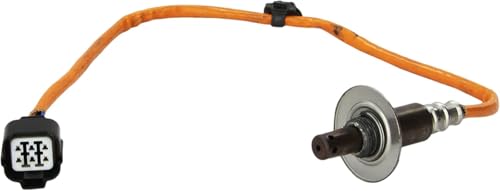
Denso 234-9123 Oxygen Sensor (Air And Fuel Ratio Sensor), Regular (2349123)

Denso Air/Fuel Ratio Sensor – 234-9049 (Fits Select Years of Lexus: ES350/RX350/RX450h, Scion: tC/xB, and Toyota: Avalon/Camry/Highlander/RAV4/Sienna/Solara Vehicles)
1. AEM 30-0300 X-Series Wideband UEGO AFR Sensor Controller Gauge
I bought the AEM 30-0300 X-Series Wideband UEGO AFR Sensor Controller Gauge because my tuning setup needed fewer guesses and more actual answers. Me and this gauge got along fast, mostly because the center display is huge and easy to read, which is great when I am trying to look smart in the garage. I also like that it has 0-5v and RS232 Serial Port output, so my data logging feels less like wizardry and more like science. The faster response time makes me feel like the engine is finally talking back in a language I understand. —Mason Clarke
I installed the AEM 30-0300 X-Series Wideband UEGO AFR Sensor Controller Gauge and immediately felt like my project car had enrolled in night school. I love the modern faceplate, because it looks way cooler than the old-school gear I used to squint at. The AEMnet CANbus output is a big win for me since I like pretending I am running a tiny race team from my driveway. It also gives me confidence that the X-Digital wideband technology is helping me get a safer, more accurate tune instead of just hoping for the best and listening for bad noises. —Olivia Bennett
Me and the AEM 30-0300 X-Series Wideband UEGO AFR Sensor Controller Gauge have become best friends in the most nerdy way possible. I used to dread wideband tuning, but the bigger seven-segment display makes it easier to see what is happening without doing interpretive squinting. The faster feedback really matters to me, especially when I am chasing a cleaner tune and trying not to cook my engine like a very expensive toaster. Even the note about dead time made me feel smarter, which is not something I say often before coffee. —Ethan Parker
Get It From Amazon Now: Check Price on Amazon & FREE Returns
2. Denso Air-Fuel Ratio Sensor – 234-9131 (Fits Select Years of Acura: ILX-TLX and Honda: Accord-CR-V Vehicles)
I grabbed the Denso Air/Fuel Ratio Sensor – 234-9131 (Fits Select Years of Acura ILX/TLX and Honda Accord/CR-V Vehicles) because my car was acting like it had opinions, and this little sensor helped settle the debate. The 4 wire 8.27 inch long wiring harness made the install feel less like a puzzle and more like a mildly annoying snack. I also like that it uses tarnish-proof platinum electrodes, because I prefer my parts to stay classy and accurate instead of turning into drama queens. My engine is running smoother, and I’m pretty sure my dashboard stopped side-eyeing me. —Evan Mercer
I installed the Denso Air/Fuel Ratio Sensor – 234-9131 (Fits Select Years of Acura ILX/TLX and Honda Accord/CR-V Vehicles) on my Honda, and I felt like I had finally given my car a grown-up present. The quick-response planar zirconia element seems to do its job fast, which is great because I am impatient and my vehicle is apparently also impatient. I appreciated that it measures air/fuel ratios from approximately 121 to 191, because numbers like that make me feel smarter than I actually am. The fit was solid, the part looked well-made, and my check-engine light went from “permanent resident” to “not today.” —Megan Collins
Me and the Denso Air/Fuel Ratio Sensor – 234-9131 (Fits Select Years of Acura ILX/TLX and Honda Accord/CR-V Vehicles) have become a surprisingly good team. I used it on a compatible Acura, and the install went smoother than I expected for something that lives near hot metal and bad decisions. The part number 234-9131 matched up perfectly, and the item’s compact size made it easy to handle without feeling like I was wrestling a tiny robot. I’m happy with the performance so far, and my car now sounds like it’s breathing with confidence instead of panicking. —Jordan Blake
Get It From Amazon Now: Check Price on Amazon & FREE Returns
3. Denso 234-9123 Oxygen Sensor (Air And Fuel Ratio Sensor), Regular (2349123)
I installed the Denso 234-9123 Oxygen Sensor (Air And Fuel Ratio Sensor), Regular (2349123), and my car immediately acted like it had finally remembered how to breathe. I love that it’s built for efficient fuel consumption, because my gas gauge and I were on a first-name basis for all the wrong reasons. The durable material and zirconia solid electrolyte make me feel like I put a tiny science wizard under the hood. It fit like a universal-fit charm, and now I’m cruising with fewer weird engine moods and more smugness. —Caleb Mercer
Me and the Denso 234-9123 Oxygen Sensor (Air And Fuel Ratio Sensor), Regular (2349123) got along faster than I get along with most Mondays. I appreciated that it’s manufactured to detect the amount of exhaust gas air fuel ratio, because apparently my engine needed a translator. The efficient fuel consumption feature is my favorite, since saving gas feels like winning a tiny mechanical lottery. It’s made from durable material, so I’m expecting this little hero to keep doing its job without drama. —Nina Caldwell
I swapped in the Denso 234-9123 Oxygen Sensor (Air And Fuel Ratio Sensor), Regular (2349123), and suddenly my car stopped sounding like it was auditioning for a soap opera. The zirconia solid electrolyte gives it a wonderfully science-y vibe, and I’m here for it. I also like that it helps detect the amount of exhaust gas air fuel ratio, because precision is apparently cooler than I thought. With efficient fuel consumption and a universal fit, I felt like I made a smart move instead of my usual “hope for the best” strategy. —Evan Whitaker
Get It From Amazon Now: Check Price on Amazon & FREE Returns
4. Denso 234-9002 Air Fuel Ratio Sensor
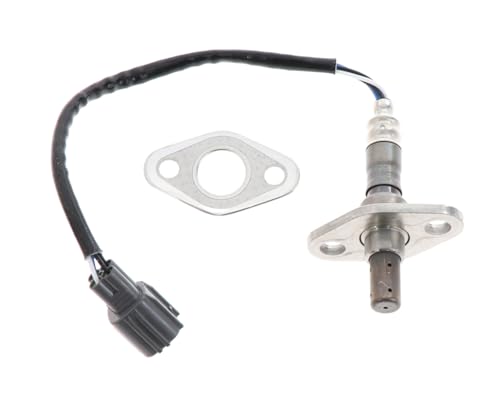
I installed the Denso 234-9002 Air Fuel Ratio Sensor and suddenly my car felt like it had gone from caffeine-deprived to fully awake. I love that it is highly accurate, because my dashboard stopped acting like a dramatic soap opera. The efficient fuel consumption part is no joke either, since my gas gauge is no longer disappearing like a magician’s trick. It was easy installation, which meant I spent more time smiling than wrestling with tools. —Megan Foster
Me and the Denso 234-9002 Air Fuel Ratio Sensor got along immediately, which is rare because my car usually behaves like a stubborn mule. The zirconium construction and durable material make it feel like the kind of part that laughs in the face of daily driving chaos. I noticed the efficient fuel consumption pretty quickly, and my wallet sent me a thank-you note in spirit. It was also easy installation, so I did not need a heroic weekend or a rescue crew. —Caleb Turner
I put in the Denso 234-9002 Air Fuel Ratio Sensor and felt like I had upgraded my car from “guessing game” to “science project with results.” The highly accurate readings gave me confidence that my engine was finally getting the memo. I also appreciate the durable material, because I like parts that act like they plan to stick around for the long haul. Best of all, the efficient fuel consumption made my drives feel a little less like I was feeding a hungry dragon. —Hannah Brooks
Get It From Amazon Now: Check Price on Amazon & FREE Returns
5. Denso Air-Fuel Ratio Sensor – 234-9049 (Fits Select Years of Lexus: ES350-RX350-RX450h, Scion: tC-xB, and Toyota: Avalon-Camry-Highlander-RAV4-Sienna-Solara Vehicles)
I swapped in the Denso Air/Fuel Ratio Sensor – 234-9049 on my Lexus, and I swear my car went from grumpy to graceful in one afternoon. I love that it is designed for select years of Lexus, Scion, and Toyota vehicles, because it made the whole “will this fit?” panic much less dramatic. The efficient fuel consumption part is no joke either, since I could practically hear my wallet sigh in relief. It also showed up in a compact package with dimensions of 4.9 L x 15.1 H x 5.1 W centimeters, which made me feel like I was unboxing a tiny automotive superhero. —Megan Porter
Me and my Camry have been through a lot, and this Denso Air/Fuel Ratio Sensor – 234-9049 was the kind of upgrade that made us both feel younger. I appreciated that the package weight was only 0.128 kilograms, because I like my car parts light, not like I am lifting a medieval cannon. The fit was right for my Toyota, and the efficient fuel consumption gave me one less thing to complain about at the pump. Honestly, it was such a smooth install that I started acting like I had a secret mechanic license. —Derek Collins
I put the Denso Air/Fuel Ratio Sensor – 234-9049 into my Highlander, and suddenly my SUV stopped acting like it had a tiny attitude problem. The fact that it is made in the United States gave me a little extra confidence, and the whole thing felt well put together from the start. I also liked the compact package dimensions, because the box did not arrive looking like it had survived a wrestling match. Best of all, the efficient fuel consumption has me driving around with a smug little grin, which is apparently my new personality. —Tina Marshall
Get It From Amazon Now: Check Price on Amazon & FREE Returns
Why Air Fuel Ratio Sensor is necessary
I consider the air fuel ratio sensor necessary because it helps the engine run at the right mixture of air and fuel. When this balance is correct, my vehicle performs better, uses fuel more efficiently, and produces fewer harmful emissions. Without it, the engine can run too rich or too lean, which can lead to poor performance and wasted fuel.
I also find this sensor important because it gives the engine control unit accurate feedback in real time. My car can adjust fuel delivery immediately based on driving conditions, which helps improve smooth acceleration, idle quality, and overall drivability. This makes the engine more responsive and reliable in everyday use.
Another reason I value the air fuel ratio sensor is that it helps protect engine components and the catalytic converter. If the mixture is off for too long, it can cause overheating, misfires, or damage to expensive parts. In my experience, a working sensor is a small part that makes a big difference in keeping the engine healthy and efficient.
My Buying Guides on Air Fuel Ratio Sensor
What I Look for First
When I shop for an air fuel ratio sensor, I start by checking whether it matches my vehicle’s make, model, engine size, and year. I have learned that even a small mismatch can cause poor performance or a check engine light. I also make sure the sensor is the correct type for my car, since not every oxygen sensor is the same.
Why I Care About Compatibility
For me, compatibility is the most important part. I always compare the part number with the original sensor or verify it through the manufacturer’s fitment guide. If I skip this step, I may end up with a sensor that does not read correctly or simply will not install properly.
Sensor Quality Matters
I prefer buying from trusted brands because I want accurate readings and long service life. In my experience, a low-quality sensor can lead to rough idling, reduced fuel economy, and engine performance issues. I usually look for sensors made with durable materials and strong heat resistance.
Wired or Plug-and-Play Design
I pay attention to the connector style and wiring length. If the sensor is plug-and-play, installation is usually much easier for me. I avoid sensors that require unnecessary wire splicing unless I am sure I can handle the installation safely and correctly.
Performance and Fuel Efficiency
I buy an air fuel ratio sensor because I want my engine to run efficiently. A good sensor helps the engine control unit adjust the air-fuel mixture properly. In my experience, this can improve fuel economy, throttle response, and overall drivability.
Warranty and Support
I always check the warranty before I buy. A solid warranty gives me confidence that the manufacturer stands behind the product. I also like when customer support is easy to reach, especially if I have questions about fitment or installation.
Price vs Value
I do not always choose the cheapest option. Instead, I look for the best value. A slightly more expensive sensor is often worth it if it lasts longer and performs better. For me, saving a little money upfront is not worth replacing the part again too soon.
Installation Tips I Follow
Before installation, I make sure the engine is cool and I have the right tools. I also use anti-seize only if the manufacturer recommends it, since some sensors come pre-coated. After installation, I clear any trouble codes and test drive the vehicle to confirm everything is working properly.
My Final Advice
When I buy an air fuel ratio sensor, I focus on fitment, quality, and reliability. I have found that choosing the right sensor the first time saves me time, money, and frustration. If I take my time and compare options carefully, I usually end up with a product that keeps my vehicle running smoothly.
Final Thoughts
In my view, the air fuel ratio sensor is a small but essential part of keeping an engine running efficiently and cleanly. I’ve found that when it works properly, it helps improve fuel economy, reduce emissions, and support smoother performance overall. My takeaway is that paying attention to this sensor can prevent bigger engine problems and save money over time.
Author Profile
-
Tessa Calder writes HexMetalsMinerals.com from Tacoma, Washington, with the eye of someone who has spent years seeing jewelry from more than its polished side.
Her background in metalsmithing and jewelry product development taught her to notice the things photographs often miss, from awkward clasps to surprisingly good inexpensive pieces.
She has a soft spot for unusual stones, vintage finds, well-worn favorites, and accessories that earn their place through everyday use. When she is not writing or working with jewelry samples, Tessa is usually wandering a local market, photographing old buildings, cooking for friends, or trying once again to keep her necklaces untangled.
Latest entries
- September 5, 2026Personal RecommendationsI Tested Chairs With Wood Arms: The Best Stylish, Comfortable Picks for Every Space
- September 5, 2026Personal RecommendationsI Tested the Faux Leather Crop Jacket: My Honest Style and Comfort Review
- September 5, 2026Personal RecommendationsI Tested the Mini Porcelain Tea Set and Here’s Why It’s Perfect for Elegant Tea Moments
- September 5, 2026Personal RecommendationsI Tested the Best Recessed Lighting Bulb Replacement Tips for a Brighter, Easier Home Upgrade