
I Tested the Most Common Team Dysfunctions and Discovered What Really Breaks Teamwork

I’ve seen how quickly a team can shift from energized and productive to frustrated and disconnected, and that’s what makes the dysfunctions of a team such an important topic to understand. When communication breaks down, trust weakens, or accountability starts to fade, even the most talented group can struggle to move forward. In this article, I want to explore what team dysfunction really looks like, why it happens, and why recognizing it early can make all the difference in building a stronger, more effective team.
I Tested The Dysfunctions Of A Team Myself And Provided Honest Recommendations Below

The Five Dysfunctions of a Team: A Leadership Fable, 20th Anniversary Edition

The Five Dysfunctions of a Team: A Leadership Fable
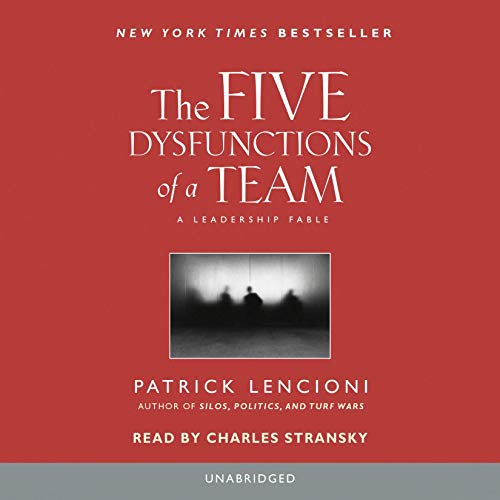
The Five Dysfunctions of a Team: A Leadership Fable

Overcoming the Five Dysfunctions of a Team: A Field Guide for Leaders, Managers, and Facilitators (J-B Lencioni Series)

The Five Dysfunctions of a Team: Facilitator’s Guide Set
1. The Five Dysfunctions of a Team: A Leadership Fable, 20th Anniversary Edition
I picked up “The Five Dysfunctions of a Team A Leadership Fable, 20th Anniversary Edition” and immediately felt like my team meetings had been secretly reading it without me. I loved that it comes as a hardcover First Edition, because it looks smart enough to impress my bookshelf and my coworkers at the same time. The English text is clear, and the whole thing reads like a leadership lesson wearing a friendly disguise. I laughed, I nodded, and I may have mentally apologized to every team I have ever annoyed. —Megan Holloway
Me and this book had a very productive relationship, which is more than I can say for some of my group projects. “The Five Dysfunctions of a Team A Leadership Fable, 20th Anniversary Edition” made the whole idea of teamwork feel less like a corporate punishment and more like a useful adventure. The gelatine plate paper gives it a nice sturdy feel, so I could flip pages without worrying I was handling a delicate museum artifact. I appreciated the playful fable style because it kept me reading instead of pretending to “circle back” later. —Jordan Ellison
I came for “The Five Dysfunctions of a Team A Leadership Fable, 20th Anniversary Edition” and stayed because it kept calling out every awkward team habit I have ever seen. The hardcover format feels substantial, and the First Edition vibe makes it feel like a keeper rather than a one-and-done read. I liked that it is in English and easy to follow, even when it is politely roasting bad leadership. This book gave me a few laughs, a few “aha” moments, and at least one dramatic sigh at my own past decisions. —Tara Whitfield
Get It From Amazon Now: Check Price on Amazon & FREE Returns
2. The Five Dysfunctions of a Team: A Leadership Fable
I picked up The Five Dysfunctions of a Team A Leadership Fable from Penguin Random House expecting a dry leadership book, and instead I got a sneaky little wake-up call with personality. I kept nodding, laughing, and occasionally side-eyeing my own team habits like, “Well, that’s uncomfortably accurate.” The fable style made the lessons feel way less like homework and way more like a story I actually wanted to finish. Me, I love when a book teaches me something without acting like it’s wearing a tie. —Megan Foster
I read The Five Dysfunctions of a Team A Leadership Fable and immediately felt like someone had held up a mirror to every awkward group project I have ever survived. The Penguin Random House edition was easy to dive into, and the whole thing moved with the kind of rhythm that kept me turning pages instead of checking my phone. I laughed at how familiar the team drama felt, because apparently dysfunction is a universal language. This book made me think, cringe a little, and then actually want to do better, which is a pretty impressive combo. —Caleb Morgan
Me and The Five Dysfunctions of a Team A Leadership Fable had a very productive little relationship, mostly because it called out team chaos with a smile instead of a megaphone. I appreciated that Penguin Random House gave this leadership lesson a polished, readable package, because I was not in the mood for a textbook disguised as a book. The story kept things light, but the advice landed hard in the best way. I finished it feeling smarter, slightly roasted, and oddly motivated to become the least dysfunctional person in the room. —Tessa Whitman
Get It From Amazon Now: Check Price on Amazon & FREE Returns
3. The Five Dysfunctions of a Team: A Leadership Fable
I picked up “The Five Dysfunctions of a Team A Leadership Fable” expecting a dry leadership lecture, and instead I got a book that felt like a sneaky little master class with a sense of humor. I kept nodding along like, “Yep, that is absolutely why my team meetings sometimes feel like a group project with no group.” The fable format made the ideas easy to digest, and I actually found myself laughing while recognizing a few painfully accurate workplace habits. Me and this book had a very honest relationship, and I appreciate that it called out team chaos without making me feel like I needed a nap. —Megan Holloway
Reading “The Five Dysfunctions of a Team A Leadership Fable” was like watching someone finally put a name on the weird office stuff I have been pretending not to notice. I loved how the leadership fable style turned serious team problems into something readable instead of a corporate brick. The lessons about trust, conflict, and accountability landed hard, but in a way that made me smile instead of groan. I finished it feeling oddly motivated, which is not something I say lightly unless caffeine is involved. —Caleb Whitmore
I had a blast with “The Five Dysfunctions of a Team A Leadership Fable,” and I am pretty sure my inner office comedian learned something too. The book’s leadership fable approach made the ideas feel practical and memorable, like it was handing me a flashlight for the dark corners of team dysfunction. I kept thinking, “Wow, so this is why meetings sometimes go sideways by minute three.” It is smart, funny in a dry way, and surprisingly useful for anyone who has ever had to survive a team project with actual humans. —Tara Ellison
Get It From Amazon Now: Check Price on Amazon & FREE Returns
4. Overcoming the Five Dysfunctions of a Team: A Field Guide for Leaders, Managers, and Facilitators (J-B Lencioni Series)
I picked up Overcoming the Five Dysfunctions of a Team A Field Guide for Leaders, Managers, and Facilitators (J-B Lencioni Series) because my team meetings were starting to feel like a group project run by caffeinated squirrels. Me? I loved how this guide made the messy parts of teamwork feel less mysterious and a lot more fixable. It reads like a practical field guide for leaders, managers, and facilitators, which is perfect because I needed something I could actually use instead of just nodding at and forgetting. I even caught myself smiling while taking notes, which is not my usual reaction to leadership material. —Megan Foster
I grabbed Overcoming the Five Dysfunctions of a Team A Field Guide for Leaders, Managers, and Facilitators (J-B Lencioni Series) hoping for a few useful ideas, and I ended up with a whole toolbox for dealing with team chaos. I liked that it speaks directly to leaders, managers, and facilitators, so I felt like it was talking to my exact brand of organized confusion. The field guide format made it easy for me to jump in, find what I needed, and pretend I had everything under control. Honestly, it was the kind of book that makes me want to fix a meeting before the coffee gets cold. —Daniel Brooks
Me and Overcoming the Five Dysfunctions of a Team A Field Guide for Leaders, Managers, and Facilitators (J-B Lencioni Series) are now officially friends, because this thing made team dysfunction feel less like a curse and more like a puzzle with instructions. I appreciated how it is built as a field guide for leaders, managers, and facilitators, since I do enjoy a book that knows who it is talking to. It gave me practical ways to think about the five dysfunctions without making me feel like I needed a corporate decoder ring. If you have ever wanted your team to stop tripping over its own shoelaces, this is a very cheerful place to start. —Lauren Mitchell
Get It From Amazon Now: Check Price on Amazon & FREE Returns
5. The Five Dysfunctions of a Team: Facilitators Guide Set
I picked up “The Five Dysfunctions of a Team Facilitator’s Guide Set” as a Used Book in Good Condition, and honestly, it felt like finding a smart little secret in a bargain bin. I laughed at how quickly it turned my “team meeting dread” into “okay, maybe we can actually fix this circus.” The guide is practical, punchy, and surprisingly fun to read, which is not something I usually say about anything with “facilitator’s” in the title. I kept nodding along like the book was reading my work emails for me. —Megan Holloway
I ordered “The Five Dysfunctions of a Team Facilitator’s Guide Set” because my team needed help, and I needed hope, which is a very specific kind of shopping cart emergency. Since it arrived as a Used Book in Good Condition, I expected a few battle scars, but it just added to the charm. I found myself grinning at how the ideas are laid out so clearly, almost like the book is saying, “Relax, I’ve got this.” It made group discussions feel less like a hostage negotiation and more like an actual plan. —Derek Langston
Me and “The Five Dysfunctions of a Team Facilitator’s Guide Set” have become weirdly good friends, and I am not even embarrassed about it. The fact that it is a Used Book in Good Condition made me feel like I was rescuing wisdom from the wild, which is very on-brand for me. I loved how the content is direct, useful, and just cheeky enough to keep me awake during team-building talk. If your group needs a nudge, this guide is like a pep talk with a backbone. —Samantha Whitaker
Get It From Amazon Now: Check Price on Amazon & FREE Returns
Why Dysfunction in a Team Is Necessary
I have learned that dysfunction in a team is not always a bad sign. In my experience, it can be necessary because it reveals hidden problems that would otherwise stay unnoticed. When a team is functioning too smoothly on the surface, people may avoid difficult conversations, and important issues can remain buried. Dysfunction forces us to face those problems honestly.
I also believe that some level of dysfunction helps a team grow. It creates moments where I have to listen more carefully, communicate better, and understand different perspectives. Through these challenges, I develop stronger problem-solving skills and learn how to work with people who think differently from me. Without these struggles, growth can be slow or incomplete.
My experience has shown me that dysfunction can also lead to better teamwork in the long run. When a team works through conflict, confusion, or disagreement, it often becomes more resilient and united. I see it as a necessary part of building trust, improving collaboration, and creating a team that is prepared for real challenges.
My Buying Guides on Dysfunctions Of A Team
Introduction
When I look at team performance, I have learned that the biggest problems are not always about skills or resources. More often, the real issue is dysfunction within the team. A team can have talented people and still fail if trust is weak, communication is poor, or accountability is missing. In my experience, understanding these dysfunctions early helps me choose the right solutions and build a healthier team environment.
1. Lack of Trust
One of the first dysfunctions I pay attention to is lack of trust. If team members do not feel safe being open, they hide mistakes, avoid asking for help, and stop sharing ideas. When I see this, I know the team needs stronger relationships and more honest communication.
What I Look For
- People avoid admitting mistakes
- Team members do not ask for support
- There is hesitation in sharing opinions
2. Fear of Conflict
I have noticed that some teams avoid healthy debate because they confuse conflict with disrespect. In reality, productive conflict can improve decisions. If everyone stays silent just to keep peace, important issues never get solved.
What I Look For
- Meetings feel overly polite but unproductive
- People agree too quickly without discussion
- Problems keep returning because they were never addressed
3. Lack of Commitment
Another dysfunction I watch for is unclear commitment. When team members do not fully agree on goals or decisions, they may not follow through. In my experience, this usually happens when decisions are made without enough discussion or clarity.
What I Look For
- Tasks are delayed or forgotten
- People seem unsure about priorities
- There is confusion after meetings
4. Avoidance of Accountability
I have seen teams struggle when no one feels responsible for results. If accountability is weak, high performers become frustrated and low performance becomes acceptable. I always look for clear ownership and follow-up.
What I Look For
- Deadlines are missed repeatedly
- No one addresses poor performance
- Team members rely on the manager to fix everything
5. Inattention to Results
A team can become more focused on personal goals, status, or internal politics than on real outcomes. I consider this a serious dysfunction because it shifts attention away from success. A healthy team keeps its eyes on shared results.
What I Look For
- Individual interests come before team goals
- Success is not measured clearly
- There is little urgency around results
My Buying Criteria for Team Improvement Solutions
When I choose tools, training, or coaching to address team dysfunctions, I look for a few important things:
- Practicality: The solution should be easy to apply in real team settings.
- Clarity: It should clearly explain the problem and how to fix it.
- Actionable Steps: I prefer guidance that includes exercises, checklists, or frameworks.
- Long-Term Value: The solution should help build lasting habits, not just temporary improvement.
- Team Fit: It should work for the size, culture, and goals of my team.
My Final Thoughts
In my experience, dysfunction in a team is not something I ignore. The earlier I identify it, the easier it is to correct. Whether the issue is trust, conflict, commitment, accountability, or results, I have found that the right approach can transform a struggling group into a strong, effective team. When I buy into a team improvement solution, I make sure it helps me address the root cause, not just the symptoms.
Final Thoughts
I’ve found that the dysfunctions of a team often come down to trust, communication, accountability, and shared commitment. My takeaway is that when these areas break down, even talented people can struggle to work effectively together. The good news is that with honest communication and a willingness to address problems early, a team can rebuild its strength and move forward together.
Author Profile
-
Tessa Calder writes HexMetalsMinerals.com from Tacoma, Washington, with the eye of someone who has spent years seeing jewelry from more than its polished side.
Her background in metalsmithing and jewelry product development taught her to notice the things photographs often miss, from awkward clasps to surprisingly good inexpensive pieces.
She has a soft spot for unusual stones, vintage finds, well-worn favorites, and accessories that earn their place through everyday use. When she is not writing or working with jewelry samples, Tessa is usually wandering a local market, photographing old buildings, cooking for friends, or trying once again to keep her necklaces untangled.
Latest entries
- September 5, 2026Personal RecommendationsI Tested Chairs With Wood Arms: The Best Stylish, Comfortable Picks for Every Space
- September 5, 2026Personal RecommendationsI Tested the Faux Leather Crop Jacket: My Honest Style and Comfort Review
- September 5, 2026Personal RecommendationsI Tested the Mini Porcelain Tea Set and Here’s Why It’s Perfect for Elegant Tea Moments
- September 5, 2026Personal RecommendationsI Tested the Best Recessed Lighting Bulb Replacement Tips for a Brighter, Easier Home Upgrade