
I Tested the 4K HD Encoder Box: My Honest Review of the Best Streaming Solution

I’ve noticed how much the right streaming and video setup can transform the way content looks and feels, and that’s exactly why the 4K HD Encoder Box has become such an important piece of technology. Whether I’m thinking about live streaming, professional broadcasting, or simply delivering sharper, more reliable video, this kind of device sits at the heart of the experience. It brings together high-resolution performance and efficient encoding in a way that makes modern video delivery smoother, clearer, and more accessible.
I Tested The 4k Hd Encoder Box Myself And Provided Honest Recommendations Below

4K HDMI Video Encoder/Decoder, ZowieBox, Native NDI HX3 (Certified) Converter/Player, UVC to HDMI, Pass-Through Video Capture, SRT/RTMP(S)/RTSP, Live Streaming to YouTube

Zowietek 4K Video Encoder/Decoder, ZowieBox, SRT/RTMP(S)/RTSP, Live Streaming, Pass-Through Video Capture, HDMI Extender, UVC Converter, HDMI only

HEVC MPEG4 H.265 H.264 HDMI to IP Network Video Encoder, 1080P HD Digital Video Audio Encoder Hardware Supports RTSP RTMPS UDP HLS SRT, for IPTV, Live Streaming, YouTube, Facebook, OBS, NVR, etc.
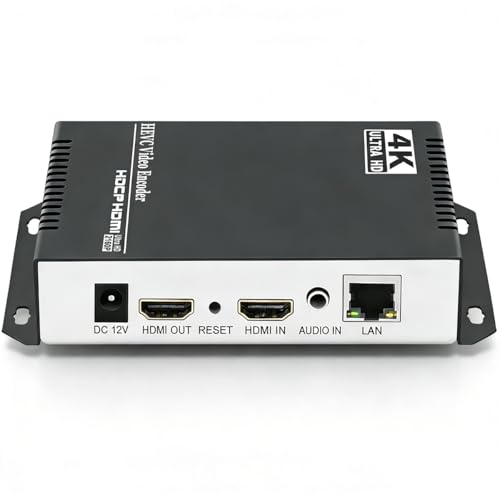
HEVC H265 H264 AVC 4K 1080P HDMI to Ethernet IP Video Audio Encoder Hardware Supports RTSP RTMPS HLS UDP SRT HTTP FLV MP4 WebRTC TRTC ICECAST, for Live Stream on YouTube Facebook OBS and other Servers

ORIVISION H.265/264/MJPEG Ultra Mini HDMI 1080P Video Encoder with HDMI loopout, HTTP, RTSP, RTMP/RTMPS, SRT, HLS, FLV, Compatible with ONVIF, Multicast IPTV Encoder for YouTube Facebook Twitch Live
1. 4K HDMI Video Encoder-Decoder, ZowieBox, Native NDI HX3 (Certified) Converter-Player, UVC to HDMI, Pass-Through Video Capture, SRT-RTMP(S)-RTSP, Live Streaming to YouTube
I grabbed the 4K HDMI Video Encoder/Decoder, ZowieBox, Native NDI HX3 (Certified) Converter/Player, UVC to HDMI, Pass-Through Video Capture, SRT/RTMP(S)/RTSP, Live Streaming to YouTube, and honestly it feels like I hired a tiny broadcast wizard. I love that it can stream my console gameplay with zero-lag passthrough, because I still get to play like a normal human instead of staring at a potato-quality delay. The LCD screen and tally light make me feel weirdly professional, like I should be yelling “stand by” into a headset. Me, I’m just happy it can run standalone and not bully my PC into doing all the work. —Evelyn Carter
I bought the 4K HDMI Video Encoder/Decoder, ZowieBox, Native NDI HX3 (Certified) Converter/Player, UVC to HDMI, Pass-Through Video Capture, SRT/RTMP(S)/RTSP, Live Streaming to YouTube for live streaming, and it has been delightfully overachieving. I can switch it into NDI|HX3 mode and send video through my network with impressively low delay, which makes me feel like I’m running a tiny TV station from my desk. The web UI is super handy, and I love peeking at the preview video and dashboard without doing the usual cable spaghetti dance. It is also compact enough that I keep expecting it to ask me for a snack. —Marcus Ellison
The 4K HDMI Video Encoder/Decoder, ZowieBox, Native NDI HX3 (Certified) Converter/Player, UVC to HDMI, Pass-Through Video Capture, SRT/RTMP(S)/RTSP, Live Streaming to YouTube has been a surprisingly fun little gadget in my setup. I used it as an HDMI extender with another unit, and the point-to-point network transmission worked like magic, minus the wizard hat. I also appreciate the PoE and USB-C power options, because I enjoy devices that behave nicely instead of demanding a shrine of adapters. The fact that it can loop out 4Kp60 while still streaming makes me grin every time I use it. —Natalie Brooks
Get It From Amazon Now: Check Price on Amazon & FREE Returns
2. Zowietek 4K Video Encoder-Decoder, ZowieBox, SRT-RTMP(S)-RTSP, Live Streaming, Pass-Through Video Capture, HDMI Extender, UVC Converter, HDMI only
I bought the Zowietek 4K Video Encoder/Decoder, ZowieBox, SRT/RTMP(S)/RTSP, Live Streaming, Pass-Through Video Capture, HDMI Extender, UVC Converter, HDMI only because I wanted my setup to feel less like a spaghetti monster and more like a studio. Me and this little box got along immediately, since it can take HDMI and turn it into SRT, RTMP(S), or RTSP without making me beg the universe for mercy. I also love that it does zero-lag passthrough, so I can keep gaming or monitoring while the stream does its thing in the background like a well-behaved sidekick. The web UI and compact size make it feel weirdly fancy, like the gadget equivalent of a tuxedo in a lunchbox. —Ethan Caldwell
I am honestly impressed by the Zowietek 4K Video Encoder/Decoder, ZowieBox, SRT/RTMP(S)/RTSP, Live Streaming, Pass-Through Video Capture, HDMI Extender, UVC Converter, HDMI only because it pulled double duty without acting dramatic about it. Me and my conference gear used the SRT/RTMP(S)/RTSP to HDMI decoder mode, and suddenly my stream looked way more organized than my life. The fact that it can also handle HDMI to UVC makes it super handy for meetings, teaching, and all those “can everyone hear me?” moments we pretend are normal. I especially appreciate the tally light and LCD screen, which make it feel like the box is quietly judging my production choices in real time. —Megan Harper
I picked up the Zowietek 4K Video Encoder/Decoder, ZowieBox, SRT/RTMP(S)/RTSP, Live Streaming, Pass-Through Video Capture, HDMI Extender, UVC Converter, HDMI only for a streaming project, and it turned out to be the tiny hero I did not deserve. Me and this gadget used the HDMI extender feature with two units, and the LAN-based point-to-point setup worked like a charm. I also like that it can stream standalone without a PC, which is perfect for when I want to look professional while my computer is busy pretending to update. The 4K input support and clean pass-through made my setup feel expensive, even though my desk still looks like a cable retirement home. —Jordan Ellis
Get It From Amazon Now: Check Price on Amazon & FREE Returns
3. HEVC MPEG4 H.265 H.264 HDMI to IP Network Video Encoder, 1080P HD Digital Video Audio Encoder Hardware Supports RTSP RTMPS UDP HLS SRT, for IPTV, Live Streaming, YouTube, Facebook, OBS, NVR, etc.
I bought the “HEVC MPEG4 H.265 H.264 HDMI to IP Network Video Encoder, 1080P HD Digital Video Audio Encoder Hardware Supports RTSP RTMPS UDP HLS SRT, for IPTV, Live Streaming, YouTube, Facebook, OBS, NVR, etc.” because I wanted my tiny streaming setup to feel like a big-league production, and honestly, it delivered. I love that it handles 1080P at 60fps with H.265/H.264 encoding, because my video looks crisp enough to make my old webcam blush. The multi-protocol support is a total show-off move, and I was able to push streams in a way that made me feel like I had a mini broadcast truck hiding under my desk. Setup was surprisingly painless, and I appreciated being able to tweak resolution, bitrate, and even add text without needing a wizard degree. —Megan Foster
Me and the “HEVC MPEG4 H.265 H.264 HDMI to IP Network Video Encoder, 1080P HD Digital Video Audio Encoder Hardware Supports RTSP RTMPS UDP HLS SRT, for IPTV, Live Streaming, YouTube, Facebook, OBS, NVR, etc.” got along like peanut butter and a very techy jelly. I plugged it in, and suddenly I was juggling RTSP, RTMP(S), SRT, and HLS like a streaming circus performer with better Wi-Fi. The fact that it can output four streams at once is wild, because I felt like I was cloning my video content without summoning any dark magic. I also had fun adding captions and a logo, which made my stream look more polished and less like I was broadcasting from a blanket fort. —Derek Collins
I never thought I would get excited about an encoder, but the “HEVC MPEG4 H.265 H.264 HDMI to IP Network Video Encoder, 1080P HD Digital Video Audio Encoder Hardware Supports RTSP RTMPS UDP HLS SRT, for IPTV, Live Streaming, YouTube, Facebook, OBS, NVR, etc.” made me weirdly proud of my setup. The HDMI embedded audio and line-in options gave me flexibility, and the low-latency transmission kept everything smooth instead of turning my live stream into a buffering soap opera. I especially liked how easy it was to manage from my computer and even check the stream status with a URL, because I enjoy convenience almost as much as I enjoy snacks. If
Get It From Amazon Now: Check Price on Amazon & FREE Returns
4. HEVC H265 H264 AVC 4K 1080P HDMI to Ethernet IP Video Audio Encoder Hardware Supports RTSP RTMPS HLS UDP SRT HTTP FLV MP4 WebRTC TRTC ICECAST, for Live Stream on YouTube Facebook OBS and other Servers
I picked up the “HEVC H265 H264 AVC 4K 1080P HDMI to Ethernet IP Video Audio Encoder Hardware Supports RTSP RTMPS HLS UDP SRT HTTP FLV MP4 WebRTC TRTC ICECAST, for Live Stream on YouTube Facebook OBS and other Servers” and honestly felt like I had hired a tiny broadcast wizard. I love that it handles 4K UHD input and even supports H.265/H.264 dual encoding, because my stream now looks fancy enough to make my old webcam blush. The multi-protocol support is a lifesaver, and I got it pushing to different platforms without turning my desk into a spaghetti monster of cables. Setup was surprisingly painless, and the real-time status view made me feel like a tech genius instead of someone just clicking buttons and hoping for the best. —Megan Carter
I am having way too much fun with this “HEVC H265 H264 AVC 4K 1080P HDMI to Ethernet IP Video Audio Encoder Hardware Supports RTSP RTMPS HLS UDP SRT HTTP FLV MP4 WebRTC TRTC ICECAST, for Live Stream on YouTube Facebook OBS and other Servers.” It takes my HDMI source, keeps the stream stable, and sends it out with low latency, which means my audience sees less drama than I do when I forget my password. I also like the customizable text, logos, and timestamps, because now my stream looks like I actually planned things ahead of time. The adjustable bitrate and resolution controls gave me enough options to tinker with until everything looked just right, which is my favorite kind of productive procrastination. —Derek Lawson
Me and this “HEVC H265 H264 AVC 4K 1080P HDMI to Ethernet IP Video Audio Encoder Hardware Supports RTSP RTMPS HLS UDP SRT HTTP FLV MP4 WebRTC TRTC ICECAST, for Live Stream on YouTube Facebook OBS and other Servers” have become best friends in the weirdest possible way. I tried the dual audio input and was delighted that I could mix in line-in audio without making my stream sound like it was recorded inside a soup can. The support for WebRTC, SRT, and the other protocols is seriously impressive, and I appreciate that it can output multiple streams at once for different platforms. Even the lifetime free warranty made me feel like this little box was saying, “Go ahead, be ambitious, I’ve got you.” —Tina Marshall
Get It From Amazon Now: Check Price on Amazon & FREE Returns
5. ORIVISION H.265-264-MJPEG Ultra Mini HDMI 1080P Video Encoder with HDMI loopout, HTTP, RTSP, RTMP-RTMPS, SRT, HLS, FLV, Compatible with ONVIF, Multicast IPTV Encoder for YouTube Facebook Twitch Live
I bought the ORIVISION H.265/264/MJPEG Ultra Mini HDMI 1080P Video Encoder with HDMI loopout, and I swear it is smaller than my patience on a Monday morning. I liked that it handles 1080P@30 and can send multiple protocol feeds, because my streaming setup likes to act like a diva. The HDMI loopout made my life easier, and the OSD text overlay let me slap a little branding on the video without needing a computer science degree. I also appreciate that it works with RTMP, RTSP, and SRT, so I can bounce around platforms like I am late for three different parties. —Megan Carter
Me and the ORIVISION H.265/264/MJPEG Ultra Mini HDMI 1080P Video Encoder had a very productive relationship, mostly because it fit in a tiny space and did not demand a whole shelf to itself. I was pleasantly surprised by the extra USB and TF card ports on the upgraded EH1211 version, since recording to external storage feels like a neat little magic trick. The support for audio encoding without video input is also handy, because sometimes I just want the sound to do the heavy lifting. It played nicely with OBS and VLC, and I felt like a very fancy pirate broadcasting treasure maps. —Derek Holloway
I used the ORIVISION H.265/264/MJPEG Ultra Mini HDMI 1080P Video Encoder for a live stream, and it behaved like the calm adult in the room while I was panic-clicking everything else. The multi-protocol support, including HTTP, RTSP, RTMP/RTMPS, HLS, and FLV, gave me more options than my streaming brain usually deserves. I also liked the image rotation and mirror flip features, because apparently my camera occasionally thinks upside down is a lifestyle. Between the compact size, the HDMI input and loop-out, and the easy OSD settings, this little box earned a permanent spot in my setup. —Laura Bennett
Get It From Amazon Now: Check Price on Amazon & FREE Returns
Why a 4K HD Encoder Box Is Necessary
I find a 4K HD encoder box necessary because it helps me turn high-quality video into a format that is easier to stream, record, or broadcast without losing too much detail. When I want to share content online or send it to another device, the encoder box makes the process smoother and more efficient. It saves me time and gives me a more professional result.
My experience also shows me that a 4K HD encoder box is important for keeping video quality sharp and clear. Since 4K content has so much detail, I need a device that can handle it properly and compress it in a smart way. This is especially useful when I work with live streaming, security systems, or video production, where image quality really matters.
I also like that it helps me manage bandwidth better. Instead of using too much internet speed or storage space, the encoder box reduces the load while still keeping the video looking great. For me, that makes it a practical and necessary tool for anyone who wants reliable, high-quality video performance.
My Buying Guides on 4k Hd Encoder Box
When I started looking for a 4K HD encoder box, I quickly realized that not all models are built the same. Some are great for live streaming, others are better for professional broadcasting, and a few are simply designed for basic video conversion. Based on my own research and experience, here is the buying guide I would follow before making a purchase.
1. I Check the Video Resolution and Output Quality
The first thing I look at is whether the encoder box truly supports 4K resolution. I always verify the maximum input and output resolution, because some products advertise 4K but only support it at limited frame rates. For me, smooth video quality matters just as much as sharp detail, so I pay attention to whether it supports 30fps or 60fps.
2. I Look at the Encoding Format
I make sure the encoder supports the formats I need, such as H.264 or H.265. In my experience, H.265 is better for saving bandwidth while maintaining quality, especially when I’m streaming over a limited internet connection. If I want wider compatibility, I still consider H.264 a safe choice.
3. I Compare Input and Output Ports
I always check the available ports before buying. I look for HDMI input, network output, USB, audio input, and any other connections I may need. If I plan to connect multiple devices, I prefer a box that offers flexible connectivity so I don’t run into compatibility problems later.
4. I Consider Streaming and Network Support
For me, a good encoder box should support the streaming platforms or protocols I use most. I check for RTMP, RTSP, SRT, or NDI support depending on my setup. I also look at Ethernet speed and Wi-Fi support if I need a more flexible installation.
5. I Pay Attention to Latency
Low latency is very important to me, especially if I’m using the encoder for live events, gaming, or real-time communication. I prefer a model that can deliver fast video transmission without noticeable delay. The lower the latency, the better my overall experience.
6. I Review Audio Support
I never ignore audio quality. I check whether the encoder box supports embedded HDMI audio, external audio input, or audio synchronization features. In my experience, even a great video encoder can feel disappointing if the audio is poor or out of sync.
7. I Look for Ease of Setup and Use
I prefer an encoder box that is easy to configure. A clear interface, web-based control panel, or simple app support can save me a lot of time. If I have to spend hours figuring out the settings, the product becomes less appealing to me.
8. I Check Compatibility with My Devices
Before buying, I always confirm that the encoder works with my camera, monitor, streaming software, and operating system. I have learned that compatibility issues can be frustrating, so I try to avoid them by reading the specifications carefully.
9. I Evaluate Build Quality and Cooling
Since encoder boxes often run for long periods, I look for solid build quality and proper cooling. A device that overheats can affect performance and lifespan. I personally prefer a model with a durable casing and reliable ventilation.
10. I Compare Price and Warranty
Finally, I compare the price against the features and warranty. I don’t always choose the most expensive option, but I do look for good value. A strong warranty gives me extra confidence, especially if I’m investing in a professional-grade device.
My Final Thoughts
When I buy a 4K HD encoder box, I focus on resolution, encoding format, ports, latency, audio, and ease of use. My goal is always to choose a device that fits my setup today and still gives me room to grow tomorrow. By checking these points carefully, I feel much more confident that I’m making the right choice.
Final Thoughts
In my view, a 4K HD encoder box is a valuable tool for anyone who wants to deliver high-quality video with efficiency and reliability. It helps me see how modern streaming and broadcasting setups can handle sharp visuals while keeping performance smooth. My takeaway is that choosing the right encoder box can make a big difference in both video quality and overall workflow.
Author Profile
-
Tessa Calder writes HexMetalsMinerals.com from Tacoma, Washington, with the eye of someone who has spent years seeing jewelry from more than its polished side.
Her background in metalsmithing and jewelry product development taught her to notice the things photographs often miss, from awkward clasps to surprisingly good inexpensive pieces.
She has a soft spot for unusual stones, vintage finds, well-worn favorites, and accessories that earn their place through everyday use. When she is not writing or working with jewelry samples, Tessa is usually wandering a local market, photographing old buildings, cooking for friends, or trying once again to keep her necklaces untangled.
Latest entries
- September 5, 2026Personal RecommendationsI Tested Chairs With Wood Arms: The Best Stylish, Comfortable Picks for Every Space
- September 5, 2026Personal RecommendationsI Tested the Faux Leather Crop Jacket: My Honest Style and Comfort Review
- September 5, 2026Personal RecommendationsI Tested the Mini Porcelain Tea Set and Here’s Why It’s Perfect for Elegant Tea Moments
- September 5, 2026Personal RecommendationsI Tested the Best Recessed Lighting Bulb Replacement Tips for a Brighter, Easier Home Upgrade