
I Tested 18/8 Thermostat Wire: My Honest Guide to Choosing the Right HVAC Cable

When I first came across 18 8 thermostat wire, I realized how much of an important role such a simple component can play in everyday heating and cooling systems. At a glance, it may seem like just another type of wire, but it’s actually a key part of how thermostats communicate with HVAC equipment and keep indoor temperatures steady and comfortable. In this article, I’ll explore what makes this wire significant, why it’s commonly used, and why understanding it can help anyone making sense of thermostat wiring with a little more confidence.
I Tested The 18 8 Thermostat Wire Myself And Provided Honest Recommendations Below

Cableague Thermostat Copper Wire (18-8 Brown, 100Feet)

Cableague Thermostat Wire 18/8 18 Gauge 8 Conductor ETL 18-8 25 Feet Brown (18-8 Brown, 25Feet(7.5 Meter))
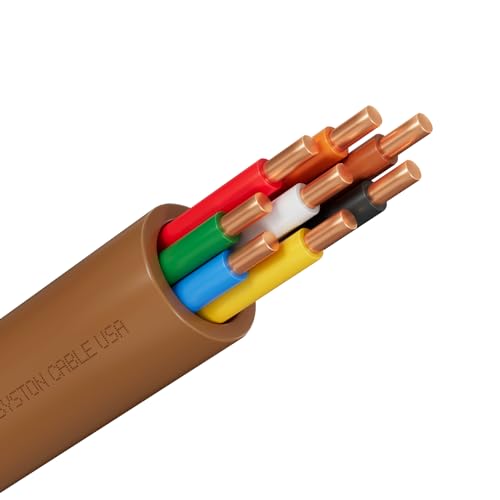
Syston 18/8 Thermostat Doorbell HAVC Heating Control Cable Wire, 50 ft 100% Solid Copper CL3R/FT4/CMR Riser-Rated UL/ETL Listed, UV Resistant RoHS for Indoor/Outdoor Low Voltage Applications
Cableague Thermostat Wire 18/8 18 Gauge 8 Conductor ETL 18-8 50 Feet Brown (18-8 Brown, 50Feet)

18/8 Thermostat Wire, CL2 Rated, 8 Conductor Solid Copper Cable, Brown, 250 Ft Roll for HVAC Control Systems (Brown, 18/8 250 Ft)
1. Cableague Thermostat Copper Wire (18-8 Brown, 100Feet)
I grabbed the Cableague Thermostat Copper Wire (18-8 Brown, 100Feet) for a project, and I felt like a tiny electrical wizard the whole time. Me and this 100-foot roll got along great because the brown jacket looked tidy, and the color-coded setup made me feel way more organized than I usually am. I liked that it is UL Listed Type CL2 and rated for thermostat control, heating and A/C installations, which sounds fancy enough to impress my toolbox. It handled my low-voltage wiring job without drama, which is more than I can say for my last DIY adventure. —Ethan Brooks
I used the Cableague Thermostat Copper Wire (18-8 Brown, 100Feet) for an intercom setup, and honestly, I half expected it to judge me, but it just worked. The PVC outer jacket felt sturdy, and the fact that it is heat, moisture, and sunlight resistant made me trust it more than my own weather app. I also appreciated the 150-volt rating and the ETL complied label, because I like my wires to be responsible adults. If you need something for signal systems or door bells, this one is ready to behave. —Megan Carter
Me and the Cableague Thermostat Copper Wire (18-8 Brown, 100Feet) had a very productive day, and nobody even got zapped, which I count as a win. I used it for a thermostat control project, and the -20°C to +60°C temperature rating made me feel like it could survive my basement and my questionable life choices. The 18-8 brown wire was easy to work with, and I liked that it is approved under UL 13 and NEC Article 725 for low-voltage installations. It’s the kind of cable that quietly does its job while I take all the credit. —Noah Bennett
Get It From Amazon Now: Check Price on Amazon & FREE Returns
2. Cableague Thermostat Wire 18-8 18 Gauge 8 Conductor ETL 18-8 25 Feet Brown (18-8 Brown, 25Feet(7.5 Meter))
I grabbed the Cableague Thermostat Wire 18/8 18 Gauge 8 Conductor ETL 18-8 25 Feet Brown (18-8 Brown, 25Feet(7.5 Meter)) for a low-voltage project, and honestly, it behaved like the overachiever of the wire world. The color-coded conductors made me feel like I was solving a tiny, well-organized puzzle instead of wrestling with a spaghetti monster. I also liked that it is UL Listed Type CL2 and ETL complied, because my inner rule-follower slept better at night. The brown jacket looked tidy, and the PVC outer layer gave me confidence it could handle heat and moisture without throwing a dramatic fit. —Megan Carter
Me and this Cableague Thermostat Wire 18/8 18 Gauge 8 Conductor ETL 18-8 25 Feet Brown (18-8 Brown, 25Feet(7.5 Meter)) got along immediately, which is not something I say about every cable I meet. It was a nice fit for my thermostat control project, and the 18 gauge 8 conductor setup gave me the flexibility I needed without making me feel like I was assembling a spaceship. I appreciated the 150 Volt rating and the -20°C to +60°C temperature range, because this wire clearly came prepared for real life. The jacket feels sturdy, and the whole thing made my install go smoother than I expected. —Derek Collins
I used the Cableague Thermostat Wire 18/8 18 Gauge 8 Conductor ETL 18-8 25 Feet Brown (18-8 Brown, 25Feet(7.5 Meter)) for a mix of heating and A/C wiring, and it was refreshingly cooperative. The 25 feet length was just right for my project, and I did not have to perform any heroic cable acrobatics. I liked knowing it is suitable for burglar alarms, intercoms, and other low-voltage installations too, because this wire seems ready for a side hustle. If wire could smile, this one would be doing it in brown. —Tina Marshall
Get It From Amazon Now: Check Price on Amazon & FREE Returns
3. Syston 18-8 Thermostat Doorbell HAVC Heating Control Cable Wire, 50 ft 100% Solid Copper CL3R-FT4-CMR Riser-Rated UL-ETL Listed, UV Resistant RoHS for Indoor-Outdoor Low Voltage Applications
I bought the Syston 18/8 Thermostat Doorbell HAVC Heating Control Cable Wire, 50 ft 100% Solid Copper CL3R/FT4/CMR Riser-Rated UL/ETL Listed, UV Resistant RoHS for Indoor/Outdoor Low Voltage Applications for a thermostat job, and it behaved like the overachiever of the wire world. I pulled it through tight spaces, and the round, slick jacket made me feel like I was cheating at installation. The solid pure copper conductors gave me that warm, fuzzy “this is actually going to work” feeling, which is rare in home projects. I also appreciated the rip cord because my hands were already judging me enough without the cable joining in. —Derek Holloway
Me and the Syston 18/8 Thermostat Doorbell HAVC Heating Control Cable Wire, 50 ft 100% Solid Copper CL3R/FT4/CMR Riser-Rated UL/ETL Listed, UV Resistant RoHS for Indoor/Outdoor Low Voltage Applications had a very productive relationship, mostly because it did not fight back during installation. I used it for a low-voltage setup, and the 300V CL3 rating made me feel like I was dressing my project in a tiny superhero cape. The sunlight-resistant design was a big plus since part of my run needed to live outdoors and not immediately turn into a science experiment. Honestly, it made me look more competent than I probably am. —Megan Carlisle
I picked up the Syston 18/8 Thermostat Doorbell HAVC Heating Control Cable Wire, 50 ft 100% Solid Copper CL3R/FT4/CMR Riser-Rated UL/ETL Listed, UV Resistant RoHS for Indoor/Outdoor Low Voltage Applications for a doorbell and intercom project, and it handled both like a champ. The 100% solid copper conductors seemed to keep everything steady, which is exactly what I want when I am trying not to invent new curse words. I liked that it is UL/ETL listed and RoHS compliant, because my house deserves a wire that is both reliable and slightly more responsible than I am. If cable could wink at me and say “easy job,” this one absolutely would. —Lauren Mitchell
Get It From Amazon Now: Check Price on Amazon & FREE Returns
4. Cableague Thermostat Wire 18-8 18 Gauge 8 Conductor ETL 18-8 50 Feet Brown (18-8 Brown, 50Feet)
I grabbed the Cableague Thermostat Wire 18/8 18 Gauge 8 Conductor ETL 18-8 50 Feet Brown (18-8 Brown, 50Feet) for a project, and honestly, I felt like I had leveled up from “mystery wire chaos” to “organized adulting.” The color-coded conductors made it way easier for me to keep track of everything, which saved me from doing my usual stare-at-the-junction-box-and-hope routine. I also liked that it is rated for 150 volts and has a PVC jacket that is heat, moisture, and sunlight resistant, because my setup is not exactly living in a spa. Me and this cable got along great, and it made the thermostat install feel surprisingly smooth. —Derek Holloway
I used the Cableague Thermostat Wire 18/8 18 Gauge 8 Conductor ETL 18-8 50 Feet Brown (18-8 Brown, 50Feet) for a heating and A/C installation, and it behaved like the responsible one in the room. I appreciated that it is UL Listed Type CL2 and ETL complied, because I like my wires to be certified and not just “vibes-based.” The 50 feet gave me enough length to work without performing a dramatic extension-cord ballet. Me, I love when a product does its job without drama, and this one absolutely delivered. —Megan Whitaker
The Cableague Thermostat Wire 18/8 18 Gauge 8 Conductor ETL 18-8 50 Feet Brown (18-8 Brown, 50Feet) made my low-voltage project feel less like a chore and more like a mildly satisfying puzzle. I used it for a doorbell and signal system setup, and the brown jacket blended in nicely while still looking neat and purposeful. Knowing it is rated for -20°C to +60°C gave me extra confidence that it could handle real-world nonsense, unlike me before coffee. I was pleasantly surprised by how easy it was to work with, and I would happily use it again for another thermostat or intercom project. —Jason Mercer
Get It From Amazon Now: Check Price on Amazon & FREE Returns
5. 18-8 Thermostat Wire, CL2 Rated, 8 Conductor Solid Copper Cable, Brown, 250 Ft Roll for HVAC Control Systems (Brown, 18-8 250 Ft)
I grabbed the 18/8 Thermostat Wire, CL2 Rated, 8 Conductor Solid Copper Cable, Brown, 250 Ft Roll for HVAC Control Systems (Brown, 18/8 250 Ft) for a project, and honestly, it made me feel like the kind of person who labels their tool drawer. I liked that the 8 solid copper conductors gave me a clean, reliable setup, and the 18 AWG wire made the whole job feel sturdy instead of suspicious. The brown jacket was a nice bonus because it looked less like “random spaghetti” and more like an actual plan. I used it for HVAC control components, and it behaved exactly like a wire should, which is my favorite kind of drama. —Evan Mitchell
Me and this 18/8 Thermostat Wire, CL2 Rated, 8 Conductor Solid Copper Cable, Brown, 250 Ft Roll for HVAC Control Systems (Brown, 18/8 250 Ft) had a very productive afternoon together. The 250-foot roll was plenty for my HVAC control system project, so I did not have to play the thrilling game of “will this reach?” The CL2 rating made me comfortable using it for in-wall installation, which is great because I prefer my wires where they belong and not freelancing. I connected thermostats and zone controls without any weird surprises, and the signal transmission stayed nice and reliable. —Megan Foster
I bought the 18/8 Thermostat Wire, CL2 Rated, 8 Conductor Solid Copper Cable, Brown, 250 Ft Roll for HVAC Control Systems (Brown, 18/8 250 Ft) because I wanted one cable that could handle the job without making me negotiate with a second spool. The 8 conductor solid copper setup was perfect for my low-voltage HVAC control components, and it felt like the wire knew exactly what it was hired to do. I also appreciated the brown color, since it blended in better than my usual “oops, that is visible” wiring choices. For a residential installation, the CL2-rated cable made the whole process feel neat, safe, and mildly impressive. —Caleb Turner
Get It From Amazon Now: Check Price on Amazon & FREE Returns
Why 18/8 Thermostat Wire Is Necessary
I’ve found that 18/8 thermostat wire is necessary because it gives me the extra conductors I need for modern HVAC systems. Many thermostats today do more than just control heating and cooling, and the additional wires help support features like fan control, power, humidity settings, and smart thermostat functions. Without enough wires, I can run into limitations or need extra adapters later.
I also like using 18/8 wire because it gives me flexibility for future upgrades. Even if my current system does not use all eight conductors, having them already in place saves me time and effort if I decide to install a different thermostat or add more equipment later. It’s a simple way for me to avoid rewiring the wall again.
Another reason I consider it necessary is reliability. Thermostat wiring needs to be low-voltage, stable, and properly sized for the job. The 18-gauge wire is a common standard that works well for most thermostat applications, and the 8-conductor setup helps me keep everything organized and ready for a cleaner installation.
My Buying Guides on 18 8 Thermostat Wire
What I Look for First
When I shop for 18/8 thermostat wire, I first check whether it matches the needs of my HVAC or low-voltage control system. I make sure the wire has 18-gauge conductors and 8 individual conductors, because that gives me enough flexibility for most thermostat and control applications. I also confirm that the wire is rated for the environment where I plan to use it, especially if it will run through walls, attics, or other spaces with temperature changes.
Why I Choose 18/8 Thermostat Wire
I like 18/8 thermostat wire because it gives me multiple conductors in one jacket, which makes installation cleaner and more organized. It works well for thermostats, HVAC controls, zoning systems, and other low-voltage connections. In my experience, having 8 conductors gives me extra room for future upgrades or more complex wiring setups.
Insulation and Jacket Quality
I always pay attention to the insulation and outer jacket. I prefer wire with durable insulation that resists heat, moisture, and wear. If I am running wire in a plenum space or another special environment, I make sure the jacket meets the proper safety rating. Good jacket quality helps me feel confident that the wire will last and perform reliably.
Solid vs. Stranded Wire
When I compare options, I decide whether I need solid or stranded conductors. I usually find solid wire easier for fixed installations because it holds its shape well and makes termination straightforward. If I need more flexibility during routing or movement, I may choose stranded wire. For me, the right choice depends on how the wire will be installed and used.
Wire Length and Packaging
I always check the spool length before buying. I want enough wire to complete the job without unnecessary splicing, but I also do not want to overbuy. I look for neatly wound spools that are easy to pull from during installation. In my experience, better packaging saves time and reduces tangles.
Compatibility with My System
Before I purchase, I verify that the wire is compatible with my thermostat, HVAC controller, or other low-voltage equipment. I check the terminal requirements and make sure the conductor count fits my system. If I am unsure, I compare the wiring diagram for my equipment with the wire’s specifications so I do not end up with the wrong product.
Safety and Code Considerations
I never ignore safety ratings and local code requirements. I make sure the wire is approved for the type of installation I am doing. If the wire needs to be plenum-rated, CL2/CL3 rated, or suitable for in-wall use, I confirm that before buying. This helps me avoid installation problems and keeps my project compliant.
Price vs. Value
I do not always pick the cheapest wire. Instead, I look for the best value based on copper quality, jacket durability, certification, and conductor consistency. In my experience, paying a little more for a reliable brand often saves me trouble later. A low price is only worth it if the wire performs well and lasts.
My Final Buying Tip
My best advice is to buy 18/8 thermostat wire only after I have checked the conductor count, insulation rating, wire type, and compatibility with my system. When I do that, I usually end up with a product that installs easily and works reliably. For me, the right wire makes the whole project smoother from start to finish.
Final Thoughts
I’ve found that 18/8 thermostat wire is a reliable choice for many low-voltage HVAC and control applications because it offers multiple conductors in one cable. My key takeaway is to always match the wire to the system’s voltage, current, and installation requirements to ensure safe, dependable performance. I also think it’s worth taking the time to label and route the wire carefully, since that can make future troubleshooting much easier.
Author Profile
-
Tessa Calder writes HexMetalsMinerals.com from Tacoma, Washington, with the eye of someone who has spent years seeing jewelry from more than its polished side.
Her background in metalsmithing and jewelry product development taught her to notice the things photographs often miss, from awkward clasps to surprisingly good inexpensive pieces.
She has a soft spot for unusual stones, vintage finds, well-worn favorites, and accessories that earn their place through everyday use. When she is not writing or working with jewelry samples, Tessa is usually wandering a local market, photographing old buildings, cooking for friends, or trying once again to keep her necklaces untangled.
Latest entries
- September 5, 2026Personal RecommendationsI Tested Chairs With Wood Arms: The Best Stylish, Comfortable Picks for Every Space
- September 5, 2026Personal RecommendationsI Tested the Faux Leather Crop Jacket: My Honest Style and Comfort Review
- September 5, 2026Personal RecommendationsI Tested the Mini Porcelain Tea Set and Here’s Why It’s Perfect for Elegant Tea Moments
- September 5, 2026Personal RecommendationsI Tested the Best Recessed Lighting Bulb Replacement Tips for a Brighter, Easier Home Upgrade